
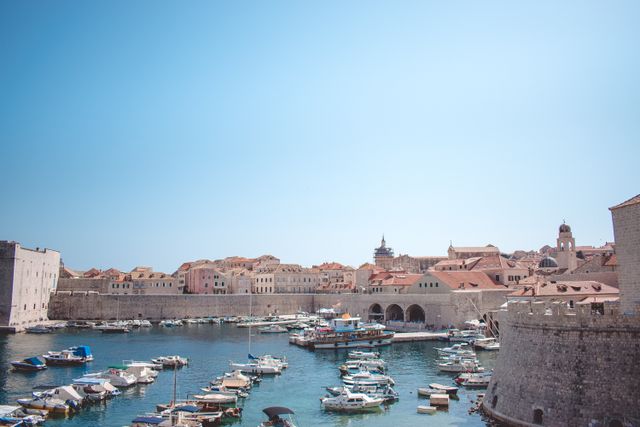
What to do in Croatia depends on the kind of trip you want. Croatia offers a long Adriatic coastline, many islands, historic old towns, national parks, and a food culture shaped by the sea and the land. This guide answers the main question directly: start with the coast and old towns, add one or two islands if you have time, and leave room for swimming, walking, and long meals. It also explains how to plan the trip, where to go, and how to travel around without rushing.
Croatia is easy to enjoy at a slow pace. Many visitors try to see too much in too few days, travelling from one famous place to another without time to enjoy the place they are in. A better approach is to choose a small number of bases, explore each one properly, and use day trips for nearby sights. Two bases in a week, or three in ten days, usually feel more relaxing than a new hotel every night.
Start With The Coast And Old Towns
Dubrovnik is the best-known city in Croatia. Its old town is enclosed by stone walls, with narrow streets, churches, squares, and views over the sea and terracotta roofs. Walking the walls gives a clear sense of the shape of the old town and the harbour below. Inside the walls, it is best to explore early in the morning or later in the afternoon, when the streets are quieter and the light is softer. Take time to sit in a square, visit a church or museum, and walk down to the harbour.
Split is different. It is a larger, working city built around the remains of the palace of the Roman emperor Diocletian. The palace area is not a closed museum. People live, shop, eat, and walk through it every day. That makes Split feel lively and real. Walk through the palace basements and courtyards, visit the cathedral and bell tower, and then walk along the Riva, the seafront promenade, where cafes and people-watching are part of the experience.
Other coastal towns are worth visiting for a quieter feel. Trogir is a small historic town on an island close to the mainland, with a compact old town that is easy to explore on foot. Sibenik has a cathedral and fortresses, and a harbour that feels less crowded than the larger resorts. Zadar has Roman and medieval remains, a lively old town, and a seafront where people gather in the evening. These towns show that Croatia is more than its two most famous cities.
Visit The Islands
Islands are a central part of what to do in Croatia. Hvar is known for its harbour town, historic buildings, lavender fields, and beaches, and it can be busy in summer. Korcula is quieter, with an old town on a small peninsula, narrow streets, and a relaxed pace. Brac is known for its white stone and for Zlatni Rat, a long beach near Bol that changes shape with the wind and sea. Vis is further from the mainland and feels more remote, with small villages, quiet coves, and a slower rhythm.
Island travel needs planning. Ferries connect the main islands to the mainland, and catamarans serve many towns, but timetables vary by season. In summer, services are more frequent. Outside summer, services are fewer, and some small places are quieter. Check ferry times before you book accommodation, especially if you arrive late or need to catch an early flight. If you stay on an island, choose a town with a harbour, shops, and transport, rather than a remote spot with no services, unless you have a car and prefer quiet.
Swimming is one of the simplest pleasures in Croatia. The Adriatic is usually clear, and many beaches are pebbly rather than sandy. Bring water shoes if you prefer them, and check local information about currents and water safety. Some beaches have facilities, cafes, and sunbeds, while others are simple coves reached by footpaths or boat. A mix of both works well: a comfortable beach for a relaxed day, and a quieter cove for a swim and a picnic.
Explore Nature And National Parks
Plitvice Lakes National Park is one of the most visited natural places in Croatia. It is known for its lakes, waterfalls, and wooden walkways through forest and water. It can be very busy in summer, so arrive early, follow the marked routes, and allow several hours. Wear comfortable shoes, carry water, and check the park rules before you visit, because swimming is not allowed in the lakes and the routes can be long.
Krka National Park, near Sibenik, offers waterfalls, river walks, and historic sites along the river. It is often easier to combine with a coastal trip than Plitvice, because it is closer to the coast. Other natural places include the Paklenica gorge for walking and climbing, and the islands of the Kornati archipelago, which are best visited by boat. If you enjoy walking, the coastal paths and island trails offer views without the crowds of the main attractions.
Enjoy Food, Markets And Local Life
Food in Croatia varies by region. Along the coast, seafood, grilled fish, olive oil, and vegetables are common. Inland, meat dishes, stews, and dishes made with local produce are more common. Istria, in the north-west, is known for truffles, olive oil, and wine, and for hilltop towns that are pleasant to explore by car. Markets are a good place to see local life. Buy fruit, cheese, bread, and olives, and ask vendors about what is in season.
Meals in Croatia are often relaxed. Lunch can be the main meal of the day, and dinner is often eaten later in the evening. In tourist areas, menus in several languages are common, but away from the main streets, smaller restaurants may offer a simpler menu. Try local dishes, but also check prices before ordering, especially for fresh fish, which is often priced by weight. A simple meal of grilled fish, salad, and bread, eaten near the sea, is often more memorable than an expensive restaurant.
Plan Your Trip Practicalities
Getting around Croatia is possible by bus, ferry, car, and plane. Buses connect many towns and cities, and are a good option for travellers who do not want to drive. Cars give more freedom, especially in Istria, inland areas, and on larger islands, but parking in old towns can be difficult and expensive. In Dubrovnik and Split, it is usually better to stay without a car and use walking, buses, and ferries. Flights connect Croatia with many European cities, and domestic flights and ferries connect the coast with the islands.
- Choose one or two bases for a short trip, and three for a longer trip.
- Book ferries and popular park visits in advance in summer.
- Pack comfortable shoes for old town streets and park paths.
- Carry water, sun protection, and a light layer for evenings.
- Check ferry timetables before choosing island accommodation.
When to visit depends on what you want. Summer is warm and lively, with the most ferries, events, and open attractions, but also the largest crowds and highest prices. Late spring and early autumn are often a good balance, with warm weather, fewer visitors, and a calmer pace. Winter is quiet, and some island services and attractions are reduced, but cities like Zagreb and Split still offer museums, cafes, and local life.
Zagreb And Inland Croatia
Zagreb, the capital, is often overlooked by visitors who fly straight to the coast. Its old town has a cathedral, a stone gate, museums, and a funicular that connects the lower and upper towns. The city also has parks, markets, and a cafe culture that is easy to enjoy. If you have an extra day, Zagreb is a good place to start or finish a trip, and it gives a different view of Croatia away from the sea.
Inland Croatia offers castles, wine regions, and thermal spas, and the landscape changes from coast to hills and plains. This part of the country is less visited, but it can be a good choice for travellers who want a quieter trip, or who are travelling by car between Zagreb and the coast. A stop inland can break a long journey and add variety to a coastal holiday.
Conclusion
What to do in Croatia is best answered by mixing coast, islands, and old towns, rather than trying to see everything. Walk the walls of Dubrovnik, explore the palace in Split, swim on an island, visit a national park, and enjoy long meals in a harbour town. Plan your bases, check ferry times, and leave unplanned time for the places you like most. For more travel planning ideas, see our Travel Guides and Budget Friendly Boat Adventures Around the World, and check official visitor information at Croatia Tourist Board and GOV.UK travel advice for Croatia before you travel.
Finally, give yourself permission to slow down. Croatia rewards travellers who linger over coffee in a square, swim twice in one day, or return to the same restaurant because the welcome felt warm. You do not need a perfect itinerary to enjoy the country. Choose a few places that genuinely appeal to you, learn a few local words, respect the places you visit, and let the trip unfold at a pace that leaves you rested rather than rushed.
Leave a Reply