
The best beaches in Norfolk range from vast, wild sands backed by dunes and pinewoods to classic Victorian seaside towns with piers, promenades and beach huts. Norfolk has about 90 miles of coastline, and North Norfolk alone offers around 45 miles of largely unspoiled shore. That variety is the county’s great strength. You can choose a lively family beach with facilities, a quiet nature reserve shoreline, or a fossil-rich stretch beneath cliffs, all within the same holiday. This guide explains which beach suits which kind of day and how to visit safely.
How To Choose The Right Norfolk Beach
Start with the experience you want. Holkham and Wells-next-the-Sea suit wide sand and space; Cromer and Sheringham suit traditional seaside towns; Brancaster is quieter; Sea Palling and Mundesley are strong family choices; West Runton appeals to fossil hunters; Hunstanton and Heacham face west for sunsets. Much of North Norfolk is a protected National Landscape of saltmarsh, dunes and bird-rich reserves. The Visit North Norfolk beaches guide lists Blue Flag beaches at Sheringham, Cromer, Mundesley, Sea Palling, East Runton and West Runton, but local signs and lifeguard advice always come first.
Holkham Beach
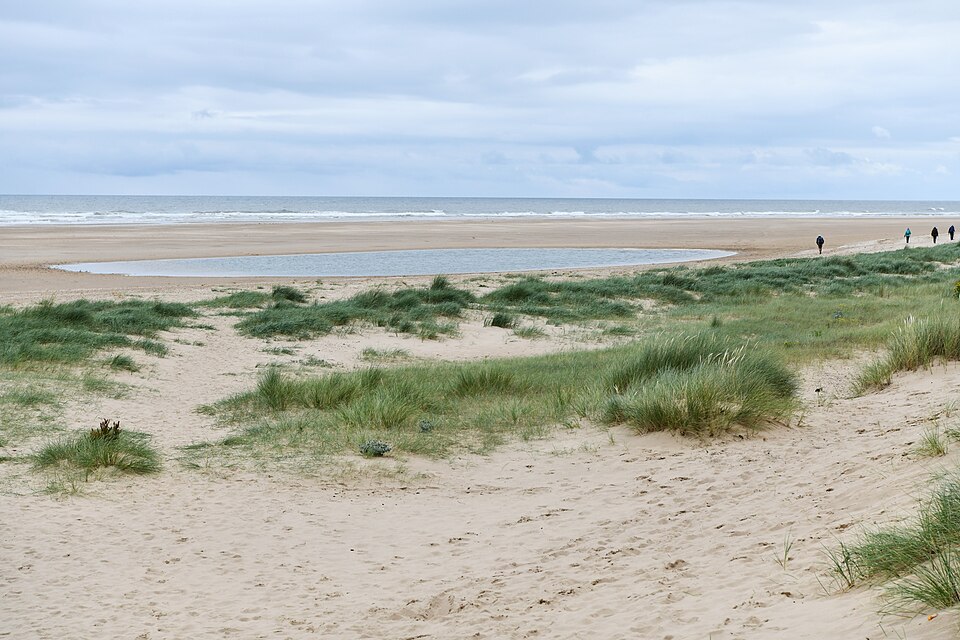
Holkham is the beach many visitors picture when they imagine Norfolk at its most spacious. White sand stretches widely at low tide, backed by dunes and pinewoods, with a basin behind the shoreline that can fill at high tide to form a shallow lagoon. The beach is part of one of the largest National Nature Reserves in England and supports rare plants and animals, so it feels wilder than a resort beach.
Choose Holkham for long walks, sandcastle space and big skies. It is also a film-famous landscape, which adds to its appeal, but the real pleasure is simpler: room to spread out and a shoreline that changes dramatically with the tide. Because the beach is vast, plan your return route carefully and check tide times before walking far out. Keep to paths through sensitive dune areas and give wildlife space.
Wells-Next-The-Sea
Wells-next-the-Sea combines a working harbour with a much-loved beach. A mile-long spit and pinewoods lead to sand and a row of colourful beach huts. The beach connects with Holkham through a two-mile pine walk on the Norfolk Coast Path. At low tide children enjoy the shallow channel known as The Run, but tides demand respect: head back when signs or the harbour hooter warn of incoming water. Wells suits families who want beach time plus shops, boats and fish and chips.
Cromer
Cromer is the classic Norfolk seaside town, with a sandy flat beach, Victorian pier, theatre and lifeboat station. Fishing boats work from the beach and the town is famous for Cromer crab, which feeds around the offshore chalk reef. Cromer suits visitors who want facilities close at hand and a beach day that continues into town. It also makes a practical base in the middle of the coast, with sandy beaches stretching east to Sea Palling, Waxham and Horsey. Swim between the flags where lifeguards are on duty.
Sheringham
Sheringham is another traditional seaside town, close to Cromer but with its own character. Its beach is pebbly near the top, revealing sand and rock pools when the tide goes out. Cliffs and wooded areas frame views over the sea, and the town has a busy high street and promenade. Sheringham is also linked with the North Norfolk Railway, known as the Poppy Line, which runs inland to Holt.
Choose Sheringham if you like a beach day mixed with town browsing, rock pooling and coastal views. The pebbles mean suitable footwear helps, especially for children and anyone with unsteady footing. At high tide the usable beach narrows, so tide times matter. Sheringham and Cromer share a long seaside history shaped by Victorian rail travel, and visiting both gives a good sense of North Norfolk’s resort heritage.
Brancaster
Brancaster offers miles of golden sand, dunes and a windswept feel, with walkers and, in designated areas, kite surfers. Nearby saltmarshes and Scolt Head Island shape this watery coast. At low tide the wreck of the SS Vina, used by the RAF for target practice before the Normandy landings, can sometimes be seen. Facilities are limited, tides and channels demand caution, and dog restrictions should be checked before visiting.
Hunstanton And Heacham
On Norfolk’s west-facing coast, Hunstanton and Heacham offer a different mood. Hunstanton, often called Sunny Hunny, is an elegant Victorian resort known for its striped cliffs. Its large sandy beach has rock pools to explore and is popular for family days and kite surfing. Because it faces west, it is especially known for sunsets over the Wash.
Heacham, a few miles along the coast, has north and south beaches facing a wide bay. Local visitor information describes its water as shallow and sheltered, making it attractive for children, although supervision remains essential. Choose this side of Norfolk for sunset walks, rock pools and a slightly different coastal light. If you are touring the county, pairing a west-coast sunset with a north-coast beach day shows how varied Norfolk can be.
Mundesley And Sea Palling
Mundesley is a quieter traditional resort with a large, flat beach backed by cliffs and colourful beach huts. It suits visitors who want a relaxed family beach away from the busiest towns. The pace is gentler, the sand is generous, and the setting feels classic without being overwhelming.
Sea Palling, further east, is known for a wide sandy beach and a series of shallow bays formed by offshore reefs. Those reefs calm the water near the shore, which makes the beach appealing for small children to paddle and play. Sea Palling has Blue Flag status and seasonal lifeguard cover in the main summer period, but families should still check flags, signs and tide conditions on the day. Both Mundesley and Sea Palling are good answers when someone asks for a practical, family-friendly Norfolk beach.
West Runton And The Deep History Coast
West Runton combines beachcombing with deep history. It is a sand and shingle beach with rock pools at low tide and cliffs behind. The area is famous for the West Runton Mammoth, described in local guidance as the largest and oldest mammoth skeleton ever found. The wider Deep History Coast also includes Happisburgh, where ancient footprints and a very old flint axe were discovered.
Choose West Runton if you enjoy fossils, geology and cliff-backed scenery. Beachcombing can be rewarding, but cliffs are active and unstable in places, so keep away from cliff bases and follow local warnings. This stretch shows that Norfolk beaches are not only for swimming. They are places where landscape, wildlife and human history meet in unusually direct ways.
Beach Safety And Lifeguards
Safety planning matters on every Norfolk beach. Visit North Norfolk states that beaches including Cromer West and East, East Runton, Mundesley, Sea Palling, Sheringham West and East, Wells-next-the-Sea and West Runton are patrolled by RNLI lifeguards from June to September between the flags. Exact seasons and daily hours can change, so check current information before you swim and never enter the water when a red flag is showing.
Before your visit, check the weather forecast and tide times, and read local hazard signs when you arrive. Keep a close eye on family and friends in and near the water, do not swim alone, and avoid inflatables, which can be carried offshore. If someone falls into water unexpectedly, the RNLI advice is to float to live: lean back, move arms and legs gently, control breathing and float. In an emergency, dial 999 and ask for the Coastguard. The official beach safety and lifeguards page is worth reading before a summer trip.
Norfolk’s sand bars and channels can appear and disappear with the tide, especially around Wells, Holkham, Brancaster and the saltmarsh coast. A beach that looks gentle at low tide can become cut off or deeper as water returns. Plan walks around tide times, tell someone where you are going on remote stretches, and turn back early rather than testing a channel.
Wildlife, Dogs And The Coastal Code
Norfolk’s beaches sit beside sensitive dunes, saltmarshes and reserves. The Norfolk Coast Partnership’s Coastal Code asks visitors to prepare, keep to paths where required, protect wildlife, take litter home and shop locally. Dog rules vary by beach and season, so check signs and council information, keep dogs under control and always bag and bin waste.
Planning A Norfolk Beach Trip
For a short trip, base yourself near the beaches you most want to see. Cromer and Sheringham suit rail travellers and visitors who want towns, piers and facilities. Wells and Holkham suit walkers and nature lovers. Brancaster and the Burnhams suit quieter stays. Sea Palling and Mundesley suit families who want calmer water and a traditional resort feel.
Norfolk also pairs well with a city day. Our guide to things to do in Norwich helps you balance coast and city, especially if you want museums, markets and historic streets between beach days. For a broader trip, our round-up of the best places to visit in England and our ideas for UK weekend breaks can help you build a route that includes Norfolk without rushing it.
Frequently Asked Questions
What Is The Best Beach In Norfolk Overall?
Holkham is often chosen for its vast sand, dunes and nature-reserve setting, while Wells-next-the-Sea is loved for its beach huts and harbour town. Cromer is the best all-round choice for families who want a pier, facilities and a traditional seaside town.
Which Norfolk Beaches Are Best For Families?
Cromer, Sea Palling, Mundesley, Wells-next-the-Sea and Heacham are strong family choices because they offer sand, facilities or shallower water. Always check tide times, lifeguard flags and local signs, and supervise children closely near channels and rock pools.
Are Norfolk Beaches Lifeguarded?
Several North Norfolk beaches have RNLI lifeguard patrols in the summer season, including Cromer, Sheringham, Mundesley, Sea Palling, Wells-next-the-Sea and the Runtons. Patrol dates and hours vary, so check current guidance and swim between the red and yellow flags.
Which Norfolk Beach Is Best For Walking?
Holkham, Wells-next-the-Sea, Brancaster and the coast around Blakeney and Morston are excellent for walking. The Norfolk Coast Path links many beaches and villages, but saltmarsh and tidal sections need careful tide planning.
Can You See Seals In Norfolk?
Yes. Blakeney Point is famous for its seal colony, and boat trips from Morston and Blakeney visit the area. Keep a respectful distance from seals, follow boat-operator and reserve guidance, and never approach pups on the beach.
Final Thoughts
Norfolk’s beaches succeed because they are not all the same. Holkham gives you space, Cromer gives you tradition, Wells gives you harbour charm, Brancaster gives you wild sand, and Sea Palling gives families calmer bays. Choose according to tide, weather, safety cover and the kind of day you want, and Norfolk will reward you with some of England’s finest coastal scenery.


Leave a Reply