
The best hobbies for women are not defined by age, and they are not a fixed list of “suitable” activities. A good hobby is simply an activity you enjoy in your free time, that fits your budget and schedule, and that leaves you feeling better than before you started. Whether you are twenty or seventy, the way to find one is the same: try something small, give it a fair few sessions, and keep only what you genuinely look forward to doing again.
What Makes A Good Hobby
A hobby is a regular activity done for enjoyment, typically during leisure time. That simple definition covers an enormous range, from collecting and making things to playing sports, learning a language, or cooking for pleasure. Researcher Robert Stebbins described three useful types of leisure: casual leisure, which is short, pleasurable activity needing little preparation; serious leisure, which is a systematic pursuit that becomes substantial and rewarding over time; and project-based leisure, which is a short-term, often one-off, project that is rewarding in itself. A good hobby for you might be any of these, and it can change as your life changes.
Start by thinking about what you actually want from a hobby. Some people want quiet time alone, others want company, and others want to learn a skill or move their body more. There is no wrong answer, but the answer changes the choice. A woman who wants calm evenings will probably enjoy reading or knitting more than a competitive team sport, while someone who feels isolated may get far more from a choir, a walking group, or a class than from a solo craft. Match the hobby to the need, not to what other people seem to enjoy.
Cost and time matter too. A hobby that needs expensive equipment or a long journey to every session is hard to keep up, however enjoyable it is. Look for something you can start with what you already own, close to home, in sessions of thirty to sixty minutes. You can always invest more later, once you know you love it.
Creative Hobbies Worth Trying
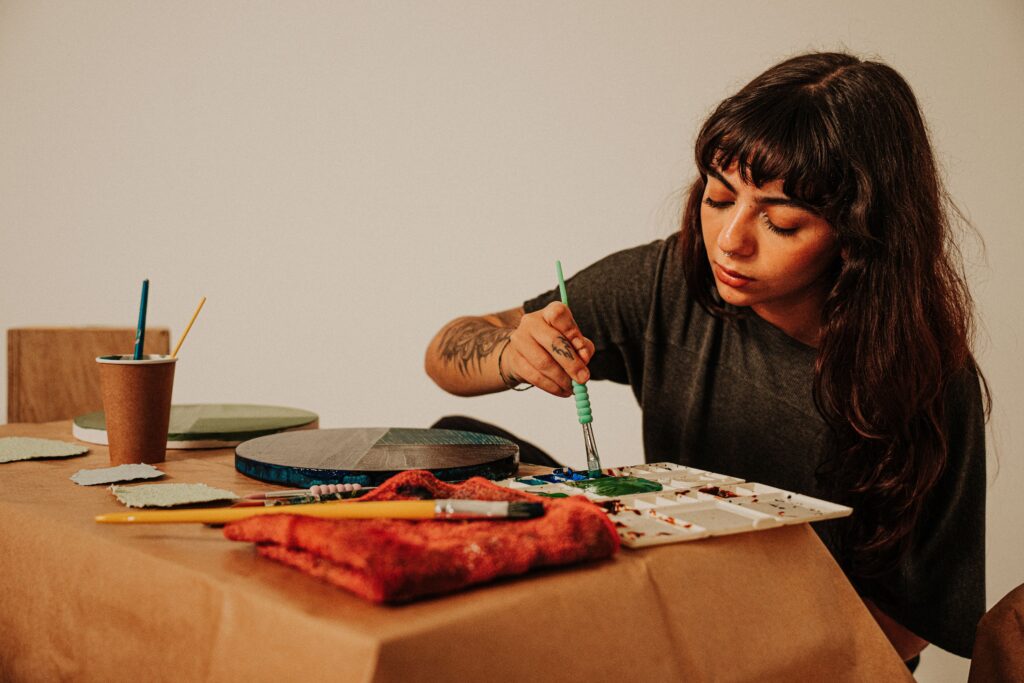
Painting and drawing are among the most accessible creative hobbies. You need only paper, pencils, and a few paints to begin, and there are free tutorials and community classes in most towns. Painting teaches you to look closely at colour and light, and it gives you something visible to show for your time. If painting feels intimidating, try sketching, watercolour, or colouring books for adults, which offer the same calm focus with a lower barrier to starting.
Writing is another hobby that costs almost nothing and fits any age. A journal, a short story, a poem, or a blog can all begin with ten minutes a day. Writing helps you notice your own thoughts more clearly, and it pairs well with travel: keeping a journal on a trip turns fleeting moments into lasting memories, as explained in How To Start A Travel Journal You Will Actually Keep.
Photography suits women who like being outdoors and noticing details. A phone camera is enough to start, and you can practise anywhere: in a garden, on a street, or on holiday. Learning about light and composition gradually improves your pictures, and sharing them with a local club or online group adds a social side. Music works the same way: learning an instrument, joining a choir, or simply singing along at home can be started at any age, and group music is one of the easiest ways to meet people with a shared interest.
Hobbies That Get You Moving
Walking is the simplest active hobby of all, and one of the easiest to keep. It needs no membership, no special skill, and no equipment beyond comfortable shoes. A daily walk, a weekend hike, or a walking group combines fresh air, gentle exercise, and time to think or talk. Swimming, cycling, and dancing offer the same benefits with more variety: swimming is gentle on joints, cycling covers more ground, and dancing adds music and social contact.
Yoga and Pilates are popular for good reason. They build strength and flexibility, they can be adapted to almost any level of fitness, and many classes welcome complete beginners. Practising at home with a video is a fine start, but a class adds structure and company, which helps you keep going on weeks when motivation dips. For a gentle introduction to calm, focused practice, see How Do You Meditate? A Beginner-Friendly Guide For Calm Daily Practice.
Hobbies For Calm And Focus
Reading is a hobby that never goes out of style and suits every budget. A library card costs nothing, and a single book can fill weeks of evenings. Reading widens your vocabulary and your view of the world, and a book club adds conversation to a solitary pleasure. Gardening offers a similar calm with a visible reward: herbs on a windowsill, flowers in a pot, or vegetables in a small plot all give you something to tend and watch grow. Gardening also gets you outside and moving gently, without feeling like exercise.
Cooking and baking count as hobbies too, not just chores. Trying one new recipe a week, learning a cuisine you enjoy, or baking for friends turns an everyday task into something creative. Cooking teaches planning, patience, and a useful life skill, and the results can be shared. Puzzles, crosswords, and board games offer quiet focus in a different way: they give your mind a clear problem to solve, away from screens and messages, and many can be enjoyed alone or with family.
If calm is what you are looking for, small daily habits help more than grand plans. Ten quiet minutes with a book, a puzzle, or a breathing practice can change the feel of a day. For ideas about building that kind of habit, see How to Feel Happy, which covers simple daily practices that support a better mood.
Hobbies That Teach You Something New
Learning a language is a hobby with practical rewards. Even a few phrases change how you travel, and regular short practice fits easily into a day. Language apps, evening classes, and conversation groups all work, and progress is easy to see. Learning an instrument, trying pottery, or taking up sewing or knitting follows the same pattern: start small, practise regularly, and accept that the first results will be rough. That is normal for every beginner, at every age.
Collecting is another long-standing hobby type, from stamps and books to vintage clothes or plants. A collection gives you a reason to research, visit markets and fairs, and meet people with the same interest. Volunteering can also be a hobby in the best sense: helping at a food bank, a library, an animal shelter, or a community garden gives structure to a week, builds friendships, and uses skills you already have. The key is to choose a cause you care about, so the commitment feels rewarding rather than draining.
Hobbies To Enjoy With Other People
Many women find that the social side of a hobby matters as much as the activity itself. Book clubs, choirs, walking groups, craft circles, and sports teams all offer regular company and a shared purpose. If you are new to an area, or your circle has changed, joining a group hobby is one of the most reliable ways to meet people. Choose a group that welcomes beginners and meets at a time you can keep.
Solo hobbies have their own value too. Painting alone, gardening alone, or reading alone can be deeply restful, and not every hobby needs an audience. A balanced week might include one social hobby and one quiet one. The point is not to fill every hour, but to have at least one activity that is yours, chosen for pleasure rather than duty.
How To Choose And Stick With A Hobby
Try one hobby at a time, for at least three or four sessions, before deciding it is not for you. The first session of anything feels awkward, and judging a hobby on a single try is unfair to it and to yourself. Keep the first steps small: one class, one book, one small project. If you enjoy it, continue; if you do not, stop without guilt and try something else. Quitting a hobby that does not suit you is not failure, it is how you find the one that does.
Watch out for two common traps. The first is buying all the equipment before you know you enjoy the activity. Borrow, rent, or buy second-hand first. The second is turning a hobby into another obligation, with strict targets and pressure to perform. A hobby should refresh you, not exhaust you. If it starts to feel like work, change how you do it or take a break.
Start With One Small Step
Hobbies are worth trying at any age because they give you something that is not work, not chores, and not scrolling. They can calm you, connect you with people, teach you skills, and give your days a shape you chose yourself. You do not need talent, a large budget, or a perfect schedule to begin. You need only one small step: pick one idea from this article, try it this week, and see how it feels. The right hobby is the one you come back to, not because you should, but because you want to.
Leave a Reply