
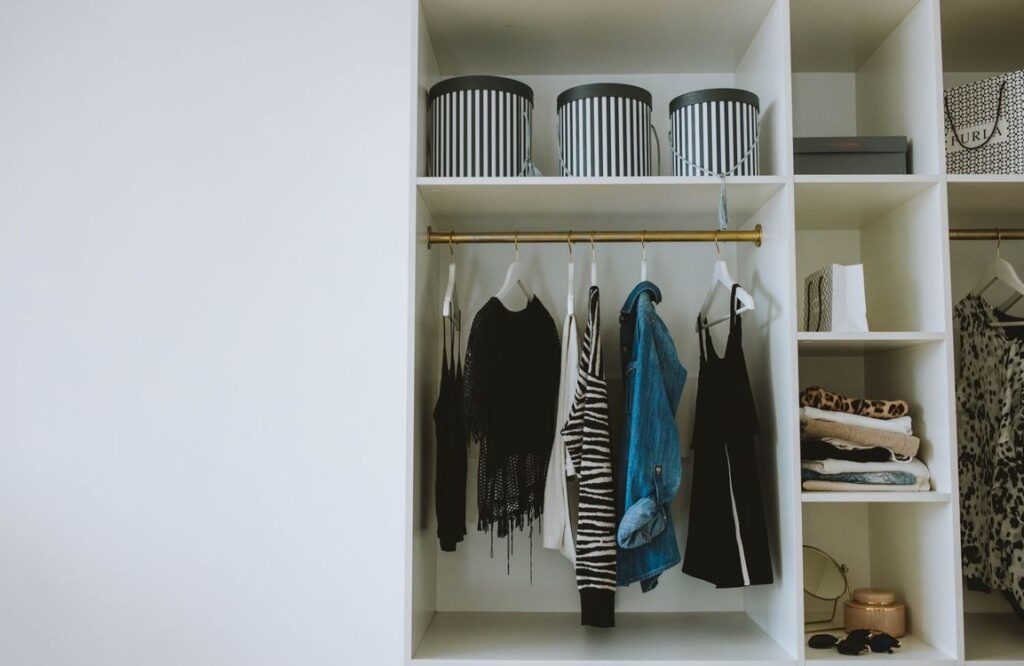
Learning how to declutter your wardrobe is easier when you follow a clear method instead of pulling everything out and hoping for the best. A good declutter leaves you with clothes you actually wear, space to see them, and a responsible plan for everything you remove. This step-by-step guide shows you how to sort, decide, donate and recycle without turning the job into an all-day struggle.
Before You Start: Set Your Goal And Time Limit
Decide what success looks like before you touch a hanger. For most people, the goal is simple: every item in the wardrobe fits, suits their current life and is in wearable condition. A clear goal makes decisions faster, because each item either supports that goal or it does not.
Set a realistic time limit. A single wardrobe rail may take an hour. A large wardrobe with drawers and storage boxes may need two shorter sessions. Working in sections keeps energy up and avoids the common trap of emptying everything onto the bed, running out of steam and stuffing it all back in. If your whole home needs attention, treat the wardrobe as one job within a wider routine, such as the approach in our house cleaning 101 guide.
Gather what you need first: bags or boxes for donations, a bag for textile recycling, a small repair pile area and a clear surface for sorting. Having containers ready stops sorted clothes drifting back into the wardrobe while you work.
Step One: Empty One Section At A Time
Work on one section at a time, such as the hanging rail, then drawers, then shelves. Take everything out of that section and wipe the rail or shelf before you put anything back. A clean, empty space makes it easier to judge how much room you really have.
Emptying one section at a time also keeps decisions focused. You can see duplicates clearly when all your shirts are in one pile. You can spot trousers that no longer fit when they sit beside the pairs you wear every week. Sorting by category, rather than by random handfuls, is what makes the method work. The same category-first approach helps in other storage areas too, as our guide on how to organise kitchen cupboards explains.
Step Two: Sort Clothes Into Clear Groups
Sort each item into one of four groups as you pick it up:
- Keep: clothes you wear, that fit and that are in good condition.
- Try on: clothes you are unsure about, including items you like but rarely wear.
- Repair or alter: clothes worth keeping once a button, hem or zip is fixed.
- Remove: clothes to donate, sell, swap or recycle.
Make the decision item by item. Do not create a large maybe pile, because it simply moves the problem to another corner. The try-on group should stay small. If almost everything lands there, your keep standards are too loose.
Handle shoes, bags and accessories in the same way if they live in the wardrobe. They take up space and affect how the wardrobe works, so they belong in the same clear-out.
Step Three: Decide What To Keep
Keep clothes that pass three simple tests. First, they fit your body now, not a past or hoped-for size. Second, they suit your current life, including your work, climate and daily routine. Third, they are in wearable condition, or can be repaired quickly.
Be honest about duplicates. Owning several similar items is fine if you wear them all. It is clutter when three of them stay untouched while one favourite does all the work. Keep the versions you reach for and let the others go.
Sentimental items need a different test. A garment kept for memory rather than wear can stay, but it should be stored deliberately, not mixed in with everyday clothes where it creates daily friction. Give keepsakes a defined space, such as one box, and keep that space within its limit.
If an item has not been worn for a year, ask why. Seasonal clothes are an exception, because heavy coats and summer dresses naturally rest for months. Outside seasonal items, a year of not wearing something usually means it does not fit your life, your body or your taste.
Step Four: Try On Anything You Are Unsure About
Try on the unsure group in front of a mirror, ideally with the shoes or layers you would normally wear with each item. Clothes often look fine on the hanger and wrong on the body. A two-minute try-on settles questions that weeks of guessing cannot.
While trying items on, check the details. Sit down in trousers. Raise your arms in tops. Look at hems, waistbands and necklines. If you would not choose to wear the item this week, given a suitable occasion, it belongs in the remove group.
Work quickly and kindly. The aim is to build a wardrobe that serves you now.
Step Five: Deal With Repairs And Alterations
A small repair pile is sensible. A missing button, a loose hem or a broken zip can often be fixed, and repairing a favourite item keeps it in use. Hertfordshire County Council’s textiles guidance points readers to the Love Your Clothes campaign for mending help, including simple fixes such as replacing a button or repairing a zip.
Set a deadline for repairs. Book the tailor, buy the button or sew the hem within a set period, such as two weeks. Items still waiting after that deadline should leave, because an endless repair pile is clutter in another form.
Be realistic about cost and effort. Altering a well-made coat may be worthwhile. Spending time and money rescuing a worn item you barely like usually is not. Repair what you will genuinely wear again, and recycle the rest through the routes in Step Seven.
Step Six: Donate Sell Or Swap Good Clothes
Clothes in good condition should stay in use. Recycle Now explains that clothes and textiles in good condition can be donated and sold for re-use, which reduces the overall impact of clothing. Good options include:
- Donate clean, wearable clothes to a registered charity or reuse organisation.
- Sell items with resale value through your usual second-hand route.
- Swap good quality clothes with friends or at a clothes swap event.
- Check whether your local authority collects clothes and textiles.
Prepare donations properly. Wash items, check pockets, fasten buttons and make sure everything is clean and dry. Charity shops need clothes they can sell, so stained, torn or broken items do not belong in a donation bag. Giving good clothes a second life is the best outcome for items you no longer wear.
Act quickly once bags are packed. Put them by the door and take them out within a few days. Bags left in a hallway for months tend to creep back into the wardrobe.
Step Seven: Recycle Worn Out Textiles
Worn out clothes still have value, so keep them out of the household rubbish bin. Recycle Now says that in the UK around 49% of unwanted textiles are thrown in the rubbish bin each year, and that items unsuitable for passing on can be recycled into products such as padding for chairs and car seats, cleaning cloths and industrial blankets.
Use textile recycling routes for items that cannot be worn again. Recycle Now advises checking whether your local authority collects textiles, using clothing and textile banks at supermarkets and car parks, and looking at retailer bring-back schemes. Hertfordshire County Council adds that textile bring banks accept usable or damaged clothes, towels and bedsheets, and asks people to make sure items are clean, dry and free of odour, bagged and labelled if damaged to help sorting.
Read the instructions on your nearest bank or collection service before you go, because accepted items vary. Keep a designated recycling bag at home so worn items have a place to go between trips.
Step Eight: Put Everything Back With A Simple System
Put kept clothes back by category, so shirts, trousers, dresses and knitwear each have a clear home. Within each category, arrange items in the order that helps you most, such as by colour or by how often you wear them. Leave a little breathing space on the rail. Clothes packed too tightly crease, hide each other and make daily choices harder.
Fold knitwear rather than hanging it if it stretches on hangers, and keep everyday items at eye level. Store out-of-season clothes separately if space is tight, in a labelled box or a less-used section, so the main wardrobe holds what you wear now.
Once the wardrobe is decluttered, you may want to think about what to keep and build on over time. If that interests you, our guide on what is a capsule wardrobe explains that approach in detail.
How To Stop Clutter Building Up Again
A declutter lasts when daily habits support it. Put clothes away after wearing or washing them instead of leaving them on a chair. Keep a small donation bag in the wardrobe, and add items to it when you notice you have stopped wearing them. A bag that fills gradually prevents another large clear-out.
Care for clothes so they last longer. The Love Your Clothes campaign, highlighted in Hertfordshire’s guidance, encourages knowing care labels, washing at 30 degrees where suitable and line drying. Better care means fewer clothes ruined by shrinking, dye running or unnecessary wear.
Shop with your wardrobe in mind. Before buying, check what you already own and ask whether the new item works with clothes you wear often. A short pause before buying stops impulse purchases becoming next year’s clutter.
Frequently Asked Questions
How Long Does It Take To Declutter A Wardrobe?
A single rail may take about an hour. A large wardrobe with drawers and storage boxes may need two shorter sessions. Working one section at a time keeps the job manageable and prevents burnout.
What Should I Do With Clothes I Have Not Worn For A Year?
Ask why you have not worn them. Seasonal items are an exception. Otherwise, if an item does not fit, does not suit your life or is not to your taste, donate, sell, swap or recycle it depending on its condition.
Can Damaged Clothes Be Recycled?
Yes. Recycle Now explains that textiles unsuitable for passing on can be recycled into new products such as padding, cleaning cloths and industrial blankets. Use textile banks or local collections, and follow their instructions.
Should I Donate Clothes With Stains Or Broken Zips?
No. Donate clean clothes in good, wearable condition. Stained or damaged items should go to textile recycling instead, where they can still be turned into useful products.
How Often Should I Declutter My Wardrobe?
A light review twice a year, when seasons change, works well for most people. Keep a donation bag in the wardrobe between reviews so unwanted items leave gradually instead of building up.
Final Thoughts
Decluttering works when each item earns its place. Sort by category, keep what fits your life now, repair what is worth saving, donate good clothes and recycle worn textiles responsibly. Finish with a simple storage system and a donation bag ready for the future, and your wardrobe will stay easy to use long after the clear-out.





Leave a Reply