
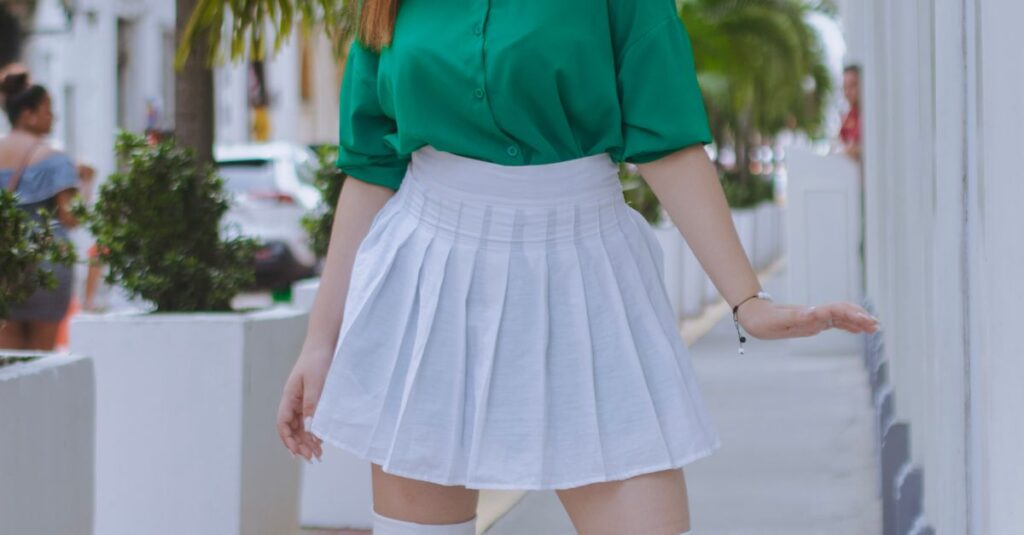
Learning how to style a pleated skirt is mostly about balance. The pleats already bring movement, texture and volume to the lower half of an outfit, so the rest of the look works best when it stays comparatively simple and neat. A tucked-in top, a defined waist and shoes that suit the length of the skirt will take you a long way. Once those basics are right, a pleated skirt becomes one of the most flexible pieces in a wardrobe, because it can look relaxed with trainers and a T-shirt or polished with a blouse, a blazer and heeled shoes. This guide explains how to choose the right length and fabric, which tops and shoes work best, and how to adapt the same skirt for every season and occasion.
Why Pleated Skirts Earn Their Place In A Wardrobe
Pleats keep returning because they solve several styling problems at once. The folds create shape without a tight fit, move gracefully when you walk, and add interest even in a plain colour. A pleated skirt can feel dressed up without extra effort, which makes it useful on days when you want to look put together easily.
The style also has a long design history. The Victoria and Albert Museum holds late-1920s fashion designs by Jean-Charles Worth for the House of Worth, including a pink day dress with a pleated skirt and textured bodice, which shows how established pleats already were in elegant daywear a century ago. Modern pleated skirts are usually made from lighter, easy-care fabrics, but the principle is the same: controlled folds give a skirt structure at the waist and freedom below it.
Start With The Right Length And Fit
Length changes the whole mood of a pleated skirt, so it is worth choosing deliberately rather than treating every pleated skirt as interchangeable.
Mini Pleated Skirts
A mini pleated skirt sits above the knee and has a playful, youthful feel. It works well with flat shoes, trainers, loafers and ankle boots, and it pairs naturally with tucked-in T-shirts, fitted knit tops and cropped cardigans. Because the skirt is short and full, keeping the top relatively neat stops the outfit from looking bulky. In colder weather, opaque tights make a mini pleated skirt practical without changing its character.
Knee-Length Pleated Skirts
A knee-length pleated skirt is the most traditional option and often the easiest to wear to work or formal daytime events. It suits blouses, fine-knit jumpers and tailored jackets, and it looks balanced with court shoes, loafers or low block heels. If you are building a small, versatile wardrobe, this length is a sensible first choice because it rarely looks out of place.
Midi Pleated Skirts
The midi pleated skirt, ending somewhere between the knee and the ankle, is the length most people reach for when they want elegance with comfort. It has enough fabric to show the movement of the pleats properly, and it works across seasons because it can be worn with bare legs in summer and with tights and boots in winter. A midi length that ends just above the ankle tends to look especially refined with heeled shoes, while a slightly shorter midi works well with trainers for a casual outfit.
Maxi Pleated Skirts
A maxi pleated skirt reaches the ankles or the floor and creates a long, flowing line. It suits warm weather, holidays and evening occasions, and it pairs well with simple fitted tops that keep the upper body streamlined. With a maxi skirt, shoe choice matters less visually because the hem covers most of the foot, but flat sandals or low heels keep the hem from dragging.
Whatever the length, the waistband should sit comfortably at your natural waist or just above it, and the pleats should fall open below the hips rather than pulling tight across them. If pleats splay open awkwardly at the front, the skirt is usually too small or the fabric is too stiff for the cut.
Choose Tops That Balance The Volume
The golden rule with a pleated skirt is to keep the top half neater than the bottom half. Pleats add width and movement, so a fitted or tucked-in top creates a clear waist and stops the outfit from looking shapeless.
Good everyday options include:
- A plain T-shirt tucked in at the front, for a relaxed weekend outfit.
- A fine-knit jumper or roll-neck, for a smooth line through the torso.
- A buttoned shirt tucked in fully, for a smarter, more structured look.
- A fitted vest top or camisole in summer, balanced by the fuller skirt.
- A cropped cardigan or short jacket that ends near the waistband.
Loose, oversized tops can still work, but they need a little structure. A front tuck, a belt over the top at the waist, or sleeves pushed up to the elbow all help to define the shape. If both the top and the skirt are loose and long, the outfit can quickly lose its outline.
For more ideas on building complete looks around versatile pieces, our guide to outfits for women shows how simple combinations can cover most everyday occasions.
Pick Shoes That Suit The Length
Shoes finish the proportions of a pleated skirt outfit, and the right pair depends mainly on where the hem ends.
With a mini pleated skirt, flat shoes keep the look fresh and casual. Trainers, ballet flats, loafers and flat ankle boots all work, and knee-high boots create a stronger, more styled silhouette in autumn and winter.
With a knee-length or midi pleated skirt, court shoes and pointed flats lengthen the leg, trainers give a relaxed feel, and ankle boots work best when the hem ends well above the boot or overlaps it cleanly. Check the outfit in a full-length mirror, because a small gap between hem and boot can look awkward.
With a maxi pleated skirt, flat sandals, espadrilles and low heels are the practical choices. Very high heels can catch in a long hem, so comfort and safety matter as much as appearance.
How To Style A Pleated Skirt In Spring
Spring suits lighter colours and softer fabrics. A pastel or cream pleated skirt pairs well with a white shirt, a light knit or a denim jacket. Trainers or loafers keep the outfit grounded, and on warmer days a sleeveless top and flat sandals complete the look. Floral pleated skirts also work well in spring, worn with a plain top in one of the colours from the print.
How To Style A Pleated Skirt In Summer
In summer, choose breathable fabrics and keep the top simple. A pleated skirt with a fitted vest top and flat sandals is a complete warm-weather outfit. For evenings, swap the vest for a silky camisole and the sandals for heeled mules. Light colours show the shadows of the pleats beautifully in daylight, and shorter skirts feel cooler because the folds allow air to circulate.
How To Style A Pleated Skirt In Autumn
Autumn is where pleated skirts really come into their own, because the texture of the pleats sits well alongside knitwear, suede and leather. A midi pleated skirt in a deeper shade such as burgundy, forest green, navy or rust pairs naturally with a fine-knit jumper, ankle boots and a tailored coat. Tights in a matching or neutral shade keep the outfit warm and visually smooth.
Our guide to knitwear is a useful companion here, because the right knit makes the difference between a pleated skirt outfit that looks polished and one that looks bulky. For more seasonal combinations, our round-up of autumn fashion covers the colours and layers that work best at this time of year.
How To Style A Pleated Skirt In Winter
Winter styling is about warmth without losing shape. Start with opaque tights, add a midi or knee-length pleated skirt in a heavier fabric, and layer a roll-neck jumper under a long coat. Knee-high boots under a midi skirt keep legs warm, while ankle boots suit shorter lengths. A belt over a jumper helps define the silhouette under winter layers.
Dressing A Pleated Skirt Up Or Down
The same skirt can cover very different occasions depending on what you pair with it.
For a casual day, wear a pleated midi skirt with a tucked-in T-shirt, trainers and a denim jacket. For work, choose a plain knee-length or midi skirt with a blouse or fine knit, loafers or low heels and a blazer. For an evening event, a metallic or satin pleated skirt with a fitted top and heeled shoes looks elegant without needing a dress. Shoes alone can shift a pleated skirt from casual to smart, and adding a blazer makes a simple outfit look more deliberate.
Pleated Skirts For Different Body Shapes
Pleated skirts can work for many body shapes with a little care. To emphasise your waist, choose a defined waistband and tuck your top in. For less volume around the hips, look for pleats stitched down through the hip area. Petite wearers usually suit knee-length or shorter midi skirts, while taller wearers carry longer lengths easily. The best test is movement: walk and sit in the skirt and check that the pleats fall back into place.
Colours, Prints And Fabrics To Look For
Plain colours are the most versatile starting point. Black, navy, cream and grey pleated skirts combine with almost any top, while jewel tones and metallics make the pleats themselves the feature. Prints work best when the top is plain, and smaller prints tend to sit more calmly in pleats than very large ones, because the folds break up the pattern.
Fabric affects how pleats behave. Lightweight fabrics give soft, fluid pleats, while firmer fabrics hold sharper folds. For everyday wear, choose a fabric that keeps its pleats after washing, and check the care label before buying.
Frequently Asked Questions
What Top Goes Best With A Pleated Skirt?
A fitted or tucked-in top goes best with a pleated skirt, because it balances the volume of the pleats and defines the waist. T-shirts, fine knits, shirts and camisoles all work, depending on the season and occasion.
Can You Wear Trainers With A Pleated Skirt?
Yes. Trainers with a pleated midi or mini skirt create a relaxed, modern outfit. Keeping the top neat and tucked in stops the combination from looking untidy.
Are Pleated Skirts Suitable For Work?
Yes. A knee-length or midi pleated skirt in a plain colour, worn with a blouse or fine knit and loafers or low heels, is smart enough for most workplaces. Adding a blazer makes the outfit more formal.
How Do You Stop Pleats From Looking Bulky?
Choose pleats that lie flat over the hips, keep the top half fitted, and define the waist with a tuck or a belt. Avoid pairing a full pleated skirt with a long, loose top, because that combination hides your shape.
What Length Of Pleated Skirt Is Most Versatile?
A midi pleated skirt is usually the most versatile length, because it works in every season, suits both casual and smart outfits, and can be worn with trainers, boots or heels.
Final Thoughts
A pleated skirt rewards simple styling. Choose a length that suits your proportions, keep the top neat, pick shoes that work with the hem, and adjust the layers to the season. With those habits, one skirt can carry you from a summer afternoon to a winter evening.


Leave a Reply