
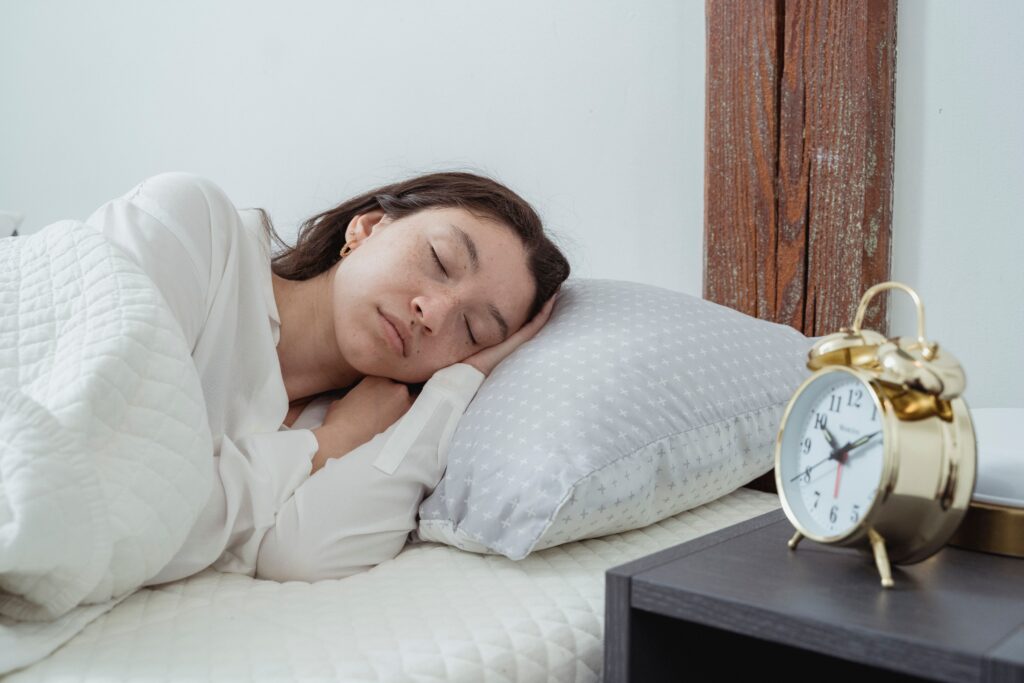
You can sleep for eight hours and still wake up feeling tired. That is the difference between sleep quantity and sleep quality, and it is why so many people feel they never quite catch up on rest. Improving your sleep quality is not about one magic trick. It is about giving your body steady conditions, night after night, so it can move through its natural sleep stages and you wake up feeling refreshed.
Good sleep quality has a few clear signs: you fall asleep within about 20 minutes, wake only briefly during the night, and wake up feeling rested. The National Health Service describes this kind of healthy sleep as the result of small changes to habits and routines, often called sleep hygiene. None of the steps below is complicated. What matters is doing them consistently.
What Sleep Quality Actually Means
Sleep is not one flat state. Over a night, you move through four stages: three stages of non-REM sleep, labelled N1, N2 and N3, followed by REM sleep. A full cycle lasts around 90 to 120 minutes, and most adults go through four or five cycles a night.
The first two stages are light sleep. N3 is deep sleep, also called slow-wave sleep, and it is the stage most linked with physical restoration. REM sleep is where most dreaming happens and the brain processes memories and emotions. Every stage has a job, so the aim is to protect the whole night so all four stages get their turn.
How Much Deep Sleep Do You Need?
Deep sleep is the stage people ask about most, partly because sleep trackers now report it every morning. The Sleep Foundation states that adults typically spend 10 to 20 per cent of the night in deep sleep, roughly 40 to 110 minutes for someone sleeping seven to nine hours. It also states clearly that there is no consensus on a single concrete number for how much deep sleep is normal or ideal, and that unless you spend a night in a sleep laboratory, it is hard to know exactly how much time you spend in each stage.
There is no deep-sleep quota to chase. Deep sleep is a proportion of your total sleep, so the simplest way to protect it is to protect your overall sleep time. Most adults should aim for at least seven hours a night. Deep sleep is concentrated in the first part of the night, while REM sleep grows longer towards the morning, so cutting the night short at either end costs you more than it seems.
Keep A Regular Sleep Schedule
If you change only one thing, make it this. Going to bed and getting up at roughly the same time every day, including weekends, is the single most powerful way to improve sleep quality. Your body runs on an internal clock, and a regular schedule trains that clock so sleepiness arrives at a predictable time.
The NHS advice is plain: keep your sleep routine the same when you can, even on days when you are not working. Try to get up at the same time every morning, even after a poor night, rather than lying in to catch up. A long lie-in feels like recovery, but it pushes your body clock later and can make the following night harder.
Pick a wake-up time you can keep on most days and work backwards. If you need to be up at 7am and want eight hours of sleep, aim to be in bed by 11pm. Give the new pattern a week or two to settle, as body clocks change slowly.
Get Morning Light And Move During The Day
Your body clock takes its cues from light, and morning light is the strongest signal of all. Getting outside within an hour or two of waking, even for a short walk, tells your body the day has started. That same signal helps your body know when the day should end, which makes it easier to feel sleepy at a sensible time in the evening.
Regular exercise during the day also supports better sleep. The NHS lists getting active as one of its tips for sleeping better, while noting that vigorous exercise close to bedtime is best avoided. Finish hard workouts a few hours before bed, and choose gentler movement, such as stretching, in the evening.
Why you keep waking up in the early hours and what to do about it
Watch Caffeine, Alcohol And Late Meals
Caffeine stays in your body for hours, so a coffee in the late afternoon can still be keeping you alert at midnight. NHS guidance advises avoiding caffeine after midday, and no tea or coffee for at least six hours before bed. If you are sensitive to caffeine, an earlier cut-off such as 2pm may suit you better. Remember caffeine is not only in coffee. Tea, cola and energy drinks all contain it.
Alcohol is a common but harmful way to try to treat sleep problems, according to NHS sleep hygiene guidance. A drink may make you feel drowsy at first, but alcohol disrupts sleep later in the night, breaking it into lighter, more fragmented sleep and cutting into the deep and REM stages.
Large meals close to bedtime can also make sleep harder, because your body is still busy digesting when you are trying to rest. The NHS notes that eating large meals close to bedtime may make it harder to fall asleep. Aim to finish your evening meal two to three hours before bed. Nicotine is a stimulant too, so smoking before bed can also disturb sleep.
Make Your Bedroom Dark, Quiet And Cool
Your bedroom should feel like a place built for sleep. Keep the room dark, quiet and cool. The NHS describes the ideal sleep environment in exactly those terms, and The Sleep Charity suggests a bedroom temperature of around 16 to 18 degrees Celsius. You do not need to measure the temperature precisely. If you wake up hot, sweaty or cold, the room is probably working against you.
Blackout curtains or a sleep mask can help if street lights reach your bed. Earplugs or a white noise machine can help with traffic or household noise. Keep the bed comfortable and the room tidy so it feels calm rather than busy.
Keep the bedroom for sleep and rest only. Working or scrolling through your phone in bed trains your brain to associate the bed with being awake. The NHS advises avoiding phones, tablets and computers for an hour before bed, because the blue light from screens can make it harder to fall asleep.
Build A Wind-Down Routine
Sleep does not switch on like a light. Your body needs a signal that the day is ending, and a short wind-down routine provides it. The aim is to lower your alertness gradually over the last hour before bed, so that by the time you get into bed you are already drifting towards sleep.
A good wind-down routine is simple and repeatable. It might include a warm bath or shower, which helps your body reach a good temperature for rest, followed by reading a book, listening to calm music or doing a few gentle stretches. The exact activities matter less than the repetition. Done at the same time each night, they become a cue your body recognises.
Writing down tomorrow’s tasks before bed can help too, especially if a busy mind keeps you awake. NHS guidance suggests writing a to-do list for the next day to organise your thoughts and clear your mind. Keep a notepad by the bed for anything that pops up later.
What To Do When You Wake In The Night
Almost everyone wakes briefly during the night, often between sleep cycles, and usually falls back asleep without noticing. The problem starts when a brief waking turns into an hour of lying awake, thinking and watching the clock. The more you try to force yourself back to sleep, the more awake you tend to feel.
If you cannot get back to sleep after about 20 to 30 minutes, the NHS advice is to get up and do something relaxing in another room, such as reading, until you feel sleepy again. Avoid bright lights and screens, and avoid checking the time repeatedly, since clock-watching adds pressure and makes sleep less likely.
What sleep deprivation does to your body and mind, and how to recover
When To Speak To Your GP
Better sleep habits help most people, but they are not a cure for every sleep problem. Sleep hygiene alone cannot cure long-term sleep problems, and if poor sleep has lasted for weeks or months despite steady changes to your routine, it is worth speaking to your GP. The same applies if you snore loudly and gasp during the night, fall asleep suddenly during the day, or feel very sleepy no matter how long you sleep, since these can be signs of a sleep disorder that needs proper assessment.
There are proven treatments for persistent sleep problems. Cognitive behavioural therapy for insomnia, known as CBT-I, is a structured programme that helps people overcome long-term sleep difficulties, and the National Institute for Health and Care Excellence recommends the Sleepio app as one way of accessing it. Your GP can advise on what is available in your area.
Frequently Asked Questions
How Long Does It Take To Improve Sleep Quality?
Most people notice some improvement within one to two weeks of keeping a regular sleep schedule and a consistent wind-down routine, but it can take longer for the full benefit to appear. Your body clock changes gradually, so give new habits at least two to three weeks before deciding whether they are working. If nothing has improved after a month of steady changes, speak to your GP.
Is It Better To Sleep Longer Or To Sleep Better?
Both matter, but quality is what makes the hours count. Seven to nine hours of broken, restless sleep leaves most people more tired than seven hours of steady, uninterrupted sleep. Protect your total sleep time first, by keeping a regular schedule, and then improve quality by fixing the habits that break your sleep up during the night.
Why Do I Wake Up Tired Even After Eight Hours?
Waking tired after a full night can have several causes. Your sleep may be fragmented by noise, light, alcohol or a room that is too warm. You may be waking from deep sleep rather than light sleep, which can leave you groggy for a while. Or a sleep disorder such as sleep apnoea may be breaking your sleep without you realising it. If it happens most nights despite good sleep habits, speak to your GP.
Disclaimer
This article is for general information only and is not medical advice. It is based on publicly available guidance from the NHS and the Sleep Foundation, and it cannot take account of your individual health or circumstances. If sleep problems persist, affect your daily life, or you have any concerns about your health, please speak to your GP or another qualified healthcare professional.
Conclusion
Improving your sleep quality is not about perfection or buying the latest gadget. It is about giving your body a steady rhythm, a calm bedroom and a clear wind-down, night after night, so your natural sleep stages can do their work. Keep your wake-up time regular, get morning light, move during the day, keep caffeine and alcohol away from bedtime, and make your bedroom dark, quiet and cool. Most people find that a few steady changes are enough to start waking up feeling genuinely rested, and if they are not, that is a good reason to talk to your GP. Sleep is the foundation the rest of your day is built on, and it is worth protecting.
Leave a Reply