
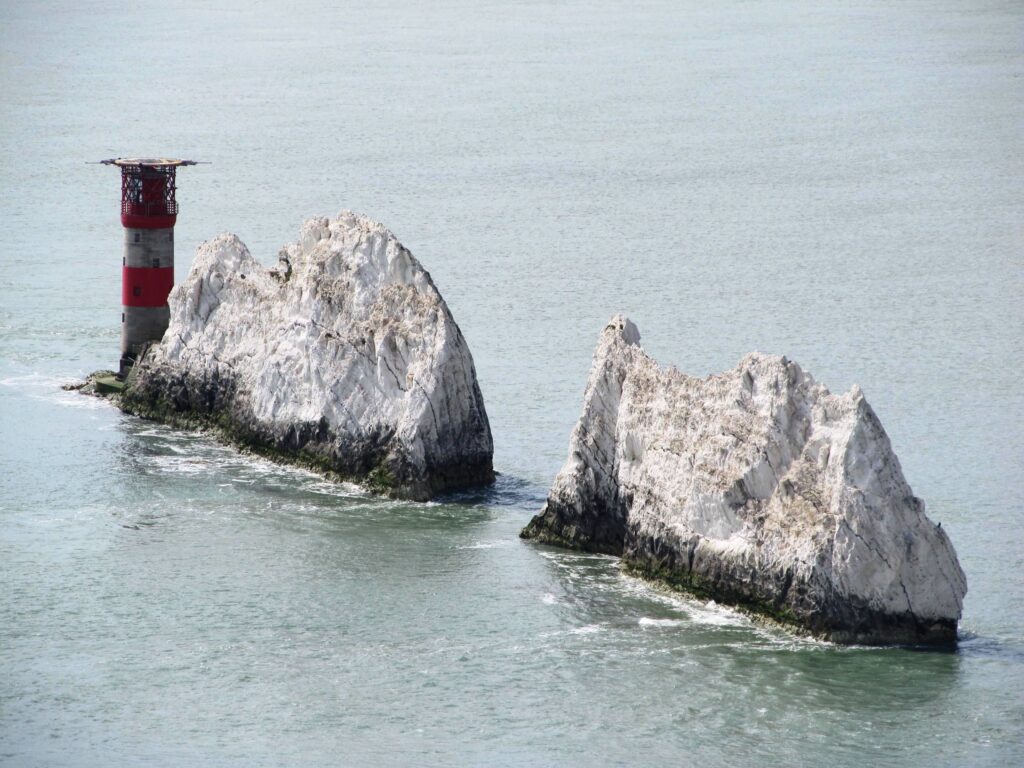
The Isle of Wight is a small island off the south coast of England, and it packs a surprising amount into its 147 square miles. The best things to do in Isle of Wight include the white chalk stacks of The Needles, the golden sands of Sandown and Shanklin, royal history at Osborne House, fossil hunting on the Dinosaur Coast, and gentle cycling along old railway lines. The whole island is a UNESCO Biosphere Reserve, and around half of it is protected as an Area of Outstanding Natural Beauty. Here are the highlights, in a sensible order.
The Needles And Alum Bay
No first trip to the island is complete without The Needles. These three chalk stacks rise about 30 metres (98 feet) out of the sea at the island’s western tip, close to Alum Bay, with the red-and-white Needles Lighthouse standing on the outermost rock. The lighthouse was built in 1859 and has been automated since 1994. The best views are free: walk out to the Old Battery, a Victorian coastal defence now cared for by the National Trust, or climb to the viewpoint near the old rocket testing station for the classic photograph of the stacks curving away from the headland.
At the Needles Landmark Attraction you can ride the chairlift down to the beach at Alum Bay, where the cliffs show bands of many-coloured sand, and boat trips leave from the shore for a closer look at the stacks and the lighthouse.
Best Beaches On The Isle Of Wight
The island has around 57 miles of coastline. The east coast has the long sandy family beaches, while the west coast is wilder, with cliffs and quiet coves.
Sandown And Shanklin
Sandown and Shanklin sit side by side on Sandown Bay, and together they offer the classic British seaside day. Both beaches have soft golden sand and gently sloping water that suits paddling and sandcastle building. Shanklin has a traditional esplanade with cafes and a pirate-themed crazy golf course, plus the pretty Shanklin Old Village behind the seafront, with thatched cottages and tea rooms. Sandown has a pier, and its seafront is backed by Sandham Gardens, with adventure golf and electric karts. Dinosaur Isle, the island’s dinosaur museum, stands right beside the beach at Sandown, so a beach morning and a museum afternoon fit together easily.
Compton Bay And The West Coast
Compton Bay is the island’s wild beach: a long stretch of unspoiled coastline backed by multi-coloured cliffs, popular with surfers and fossil hunters, and at its best at sunset. At low tide you may spot dinosaur footprints in the rocks, but check the tide times before you go and keep away from the base of the cliffs, which can crumble.
Ryde And Appley Beach
Ryde is where many foot passengers arrive, and its beach is one of the largest stretches of sand on the island. At low tide the sands seem to go on for ever, which makes it a good choice for a long walk or a game of beach cricket. Ryde Pier is the oldest pier in the UK, and walking its length is a pleasant way to start a day on the island.
a first-timer’s guide to another island destination
History And Heritage
Osborne House
Osborne House, at East Cowes, was the seaside home of Queen Victoria and Prince Albert. The house was built between 1845 and 1851 to Albert’s Italianate design, and Victoria loved it so much that she died there on 22 January 1901. Today it is managed by English Heritage, and a visit takes you through the grand state rooms, including the Durbar Room, and out into the gardens, the Swiss Cottage, and the family’s private beach. Check English Heritage before you travel, as winter hours are shorter.
Carisbrooke Castle
Carisbrooke Castle stands on a hill above Newport, the island’s county town, and it has guarded the island for centuries. Its most famous prisoner was Charles I, who was held here before his trial, and you can still see the window from which he tried to escape. The castle’s donkeys still work the well wheel, much as they have for generations.
Family Days Out
The Isle of Wight is one of the easiest family holidays in the UK, because the attractions are close together and nobody spends long in the car.
Blackgang Chine
Blackgang Chine is Britain’s oldest amusement park, delighting families since 1843. It is perched on the cliffs above Chale Bay, and it is unlike a modern theme park: instead of big rollercoasters, you get themed lands to explore, including a pirate cove, a fairyland, a cowboy town, and a land of dinosaurs, along with rides and a maze. It suits younger children best. Check the park’s own opening calendar before you go, as it is seasonal.
Dinosaur Isle And Fossil Hunting
The Isle of Wight is often called Dinosaur Island, and with good reason: its cliffs and beaches have produced some of Europe’s most important dinosaur finds. Dinosaur Isle, the museum in Sandown, is shaped like a giant pterodactyl and holds life-sized reconstructions, animatronic dinosaurs, and a large collection of real fossils found on the island. After the museum, try fossil hunting for yourself at Compton Bay or Yaverland Beach near Sandown, where 125-million-year-old dinosaur footprints can be seen in the rocks at low tide. Go at low tide, wear sturdy shoes, and do not hammer at the cliffs.
Isle Of Wight Steam Railway
The Isle of Wight Steam Railway runs restored steam engines and Victorian and Edwardian carriages through the countryside from Havenstreet. Children can dress up as drivers and guards, and the Train Story Discovery Centre at Havenstreet is an interactive museum full of hands-on exhibits about the island’s railway past.
how to plan your travel dates and bookings
Villages, Walks And Cycling
Some of the best things to do in Isle of Wight cost nothing at all: the villages are small and pretty, and the coastal walks are some of the finest in England.
Coastal Walks
The Isle of Wight Coastal Path runs for about 70 miles around the whole island, and it is easy to walk in sections. The stretch from Freshwater Bay to The Needles, along Tennyson Down, is one of the finest short walks in the country, named after the poet Alfred Lord Tennyson, who lived nearby. For a gentler walk, try the promenade from Sandown to Shanklin, or the cliff path above Ventnor, the town with the island’s mildest climate.
Cycling The Red Squirrel Trail
The Red Squirrel Trail is a 32-mile, mostly traffic-free cycling route that follows old railway lines and quiet country lanes from Cowes to Sandown, with shorter loops for families. It takes you through estuaries, woodland, farmland, and coastline. The trail is named after the island’s red squirrels, one of the few remaining strongholds of the species in England.
Getting There And Getting Around
The Isle of Wight has no bridge to the mainland, so you arrive by ferry or hovercraft across the Solent, and the crossing is part of the fun. Wightlink sails from Portsmouth to Fishbourne for cars and foot passengers, a crossing of about 45 minutes, and from Lymington to Yarmouth, about 40 minutes. Its FastCat catamaran runs from Portsmouth Harbour to Ryde Pier Head for foot passengers in about 22 minutes, connecting with trains at both ends. Red Funnel sails from Southampton to East Cowes for cars and foot passengers, a crossing of about an hour, and its Red Jet catamaran runs from Southampton to West Cowes for foot passengers in about 25 minutes. Hovertravel runs the hovercraft from Southsea to Ryde, the fastest crossing at around ten minutes.
Once you are on the island, a car makes life easier, especially for reaching the west coast and the smaller villages. Buses run between the main towns and resorts, and the open-top Needles Breezer and Downs Breezer routes are a good way to sightsee in summer.
Practical Tips For Your Visit
A little planning makes an island trip much smoother. These tips cover the points that catch first-time visitors out.
- Book your ferry early for summer weekends and school holidays, as the popular car crossings sell out.
- Check tide times before fossil hunting or visiting beaches like Compton Bay, where the best finds appear at low tide.
- The island’s weather changes quickly, so pack a waterproof jacket and layers even in summer.
- Many attractions, including Osborne House and Blackgang Chine, are seasonal, so check opening days and hours before you travel.
- Book accommodation early for the Isle of Wight Festival in June and Cowes Week, the famous sailing regatta held in August.
Frequently Asked Questions
How Many Days Do You Need On The Isle Of Wight?
Three or four days is a good length for a first visit. That gives you a day for The Needles and the west coast, a day for the beaches and Sandown Bay, a day for Osborne House and Carisbrooke Castle, and a day for a family attraction or a walk.
What Is The Best Time To Visit The Isle Of Wight?
The best time to visit is between May and September, when the weather is warmest and most attractions are open. June is the month of the Isle of Wight Festival, and August brings Cowes Week. Spring and autumn are quieter, with fewer crowds and lower ferry fares.
Can You Visit The Isle Of Wight As A Day Trip?
Yes. The FastCat from Portsmouth to Ryde takes about 22 minutes, and the hovercraft from Southsea takes around ten minutes. A day trip works best if you choose one area, such as Ryde and the east coast, or a bus tour to The Needles.
Is The Isle Of Wight Good For Families?
Yes, it is one of the best family destinations in the UK. The beaches at Sandown and Shanklin are safe and sandy, Blackgang Chine and the Steam Railway are built for children, and the fossil hunting and dinosaur museum add an educational side that children genuinely enjoy.
Do You Need A Car On The Isle Of Wight?
A car is helpful but not essential. Foot passengers can use the buses, which link the main towns, beaches, and attractions, and the open-top sightseeing buses cover the popular routes in summer. If you want to explore the west coast and the quieter beaches at your own pace, a car is worth bringing.
another UK city break idea for your next trip
Conclusion
The best things to do in Isle of Wight suit almost every kind of traveller. Families get safe sandy beaches, Britain’s oldest amusement park, and a dinosaur coast that children never forget. Couples get cliff-top walks and quiet coves. History lovers get a royal palace and a medieval castle within a few miles of each other. And everyone gets the crossing itself, a short hop across the Solent that feels like a proper escape from the mainland. Plan around the ferries, book the popular attractions in advance during school holidays, and leave room for the unplanned stops: a farm shop, or an extra hour on a beach at sunset. The island rewards a slower pace, and that is exactly why people keep coming back. For more ideas and opening details, the island’s official visitor guide at Visit Isle of Wight is the best place to start.
Leave a Reply