
The best sites to see in the UK stretch far beyond a single city. The United Kingdom is made up of four nations — England, Scotland, Wales and Northern Ireland — and each one has famous places of its own, from ancient stone circles and royal castles to wild coastlines and mountain landscapes. This guide covers the famous places worth your time across all four nations, with practical advice on fitting them into a real trip.
How To Plan A Trip Around The UK
The UK looks small on a map, but travelling between its famous sites still takes time. London to Edinburgh is around four and a half hours by train, and reaching the Giant’s Causeway involves a ferry or a short flight to Belfast. The simplest approach is to pick one base per nation: London for southern England, York or the Lake District for the north, Edinburgh for Scotland, Cardiff or Snowdonia for Wales, and Belfast for Northern Ireland. Trains connect most major cities, and hiring a car makes the countryside and coastal roads far easier to reach. VisitBritain is a useful starting point for planning routes and finding current visitor information.
Famous Sites In England
England holds the largest share of the UK’s most visited attractions, and most first-time visitors start here.
Stonehenge In Wiltshire
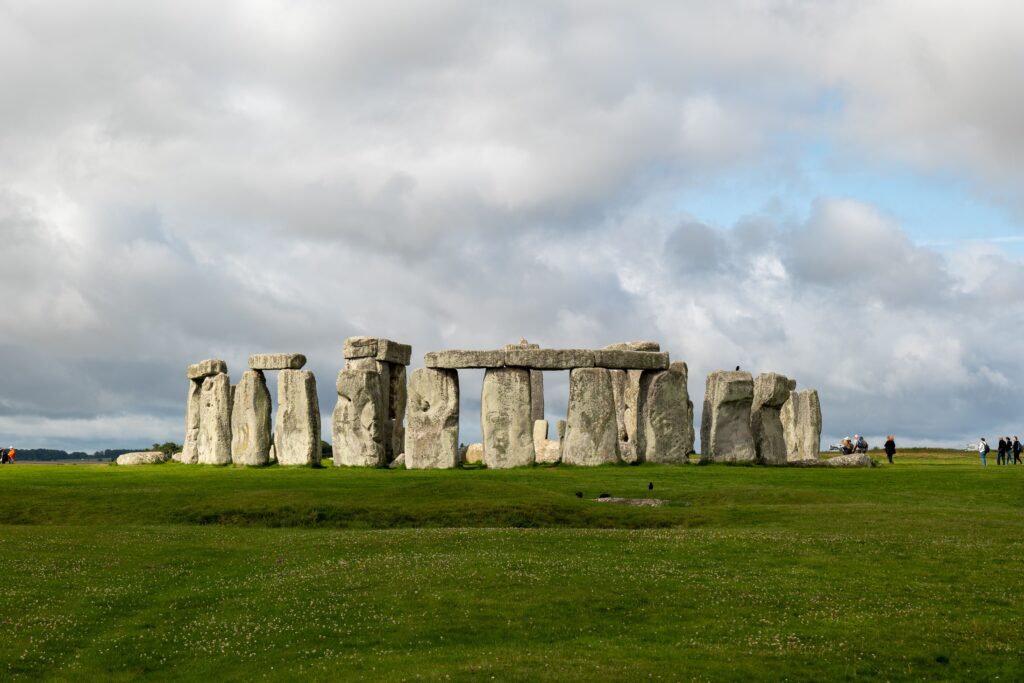
Stonehenge stands on Salisbury Plain in Wiltshire, and it is one of the most famous prehistoric monuments in the world. The stone circle was built in stages roughly 3,500 to 5,000 years ago, and archaeologists still debate exactly why it was raised and how its builders moved such huge stones. It was inscribed as a UNESCO World Heritage Site in 1986, together with Avebury and the surrounding landscape. A visitor centre explains the history, and a shuttle or a short walk takes you to the stones.
The Tower Of London And Tower Bridge
The Tower of London sits on the north bank of the River Thames and has served as a royal palace, fortress and prison over its long history. Today it is best known as the home of the Crown Jewels, and its Yeoman Warders — the Beefeaters — lead tours that bring the building’s stories to life. A short walk along the river brings you to Tower Bridge, the Victorian bascule bridge with its two Gothic towers that most people picture when they think of London. Tower Bridge opened in 1894, and its high-level walkways now hold an exhibition with glass floor sections looking down at the river below.
The British Museum In London
The British Museum is one of the world’s great museums, and entry is free. It was founded in 1753, and its collection covers human history from ancient Egypt and Greece to Asia, Africa and the Americas. The Rosetta Stone, the Egyptian mummies and the Parthenon sculptures are among its most famous objects, but the real pleasure of the museum is wandering between galleries and finding something unexpected. Because it is so large, choose two or three galleries in advance rather than trying to see everything in one visit.
The City Of Bath And The Roman Baths
Bath is one of the few UNESCO World Heritage Sites that covers an entire city. It was inscribed in 1987 for its Roman baths and its Georgian architecture, and the two sit side by side in the city centre. The Roman Baths are remarkably well preserved, and the museum around them explains how the hot springs were used nearly 2,000 years ago. Above ground, the Royal Crescent — a sweeping curve of 30 terraced houses built between 1767 and 1775 — is one of the finest pieces of Georgian town planning in Britain.
The Lake District In Cumbria
The Lake District is England’s largest national park and one of its most loved landscapes. It was inscribed as a UNESCO World Heritage Site in 2017 for a cultural landscape that inspired Romantic writers and artists, including William Wordsworth and Beatrix Potter. The park holds Scafell Pike, the tallest peak in England, and Windermere, the largest lake in England. Walking is the main attraction, from gentle lakeside paths to serious mountain routes, but there are also steamers on the lakes, historic houses and quiet villages such as Grasmere and Ambleside.
Famous Sites In Scotland
Scotland’s famous places mix dramatic history with some of the wildest scenery in the UK.
Edinburgh Castle And The Royal Mile
Edinburgh Castle sits on Castle Rock, an extinct volcanic rock that rises above the city, and it has dominated Scotland’s capital for centuries. The castle holds the Honours of Scotland — the Scottish Crown Jewels — along with the Stone of Destiny, and its ramparts give wide views over the city. Below the castle, the Royal Mile runs through the Old Town to the Palace of Holyroodhouse, lined with closes, courtyards and historic buildings. The Old and New Towns of Edinburgh were inscribed as a UNESCO World Heritage Site in 1995.
The Scottish Highlands And Loch Ness
The Highlands cover the northern half of Scotland, and they are the UK’s great wilderness. Ben Nevis, near Fort William, is the highest mountain in the UK at 1,345 metres, and the glens and lochs around it are among the most photographed landscapes in Britain. Loch Ness draws visitors for its scenery as much as for the legend of its monster, and the ruined Urquhart Castle on its shore is one of the most visited castles in Scotland. The North Coast 500, a circular driving route around the far north, is a popular way to see the Highlands, but it needs at least five days to do properly.
Famous Sites In Wales
Wales is smaller than England or Scotland, but it has more castles per square mile than almost anywhere in Europe, along with mountains and a long, varied coastline.
Eryri National Park And Yr Wyddfa
Eryri, known in English as Snowdonia National Park, covers 823 square miles of north-west Wales, and it is Wales’s largest and highest national park. At its heart stands Yr Wyddfa, the mountain most visitors still know as Snowdon. It rises 1,085 metres above sea level, making it the highest mountain in Wales and in England. In 2022 the National Park Authority formally adopted the Welsh names Eryri and Yr Wyddfa, and those are the names now used on official signs. There are several walking routes to the summit, and the Snowdon Mountain Railway runs from Llanberis in the busier months.
Cardiff Castle And Conwy Castle
Cardiff Castle sits in the middle of the Welsh capital, and it is a good introduction to Welsh history in a single building. Its story runs from a Roman fort through a Norman castle to a spectacular Victorian rebuilding, and guided tours explain each layer. Further north, Conwy Castle is one of the great medieval fortresses of Britain, built as part of a ring of castles around the Welsh coast. Its eight towers still stand above the walled town of Conwy, and the views from the battlements stretch across the estuary to the mountains of Eryri.
Famous Sites In Northern Ireland
Northern Ireland is often the last part of the UK that visitors reach, and it is often the part they wish they had given more time.
The Giant’s Causeway In County Antrim
The Giant’s Causeway sits on the County Antrim coast, and it is Northern Ireland’s most famous natural landmark. Around 40,000 interlocking basalt columns step down into the sea, formed by volcanic activity around 50 to 60 million years ago. It was inscribed as a UNESCO World Heritage Site in 1986 and is managed by the National Trust. Local legend says the giant Finn McCool built the causeway as a path to Scotland, and the visitor centre tells both the myth and the geology. The Causeway Coastal Route, the road that runs along the Antrim coast to the site, is one of the best drives in Europe, passing castles, glens and small harbours.
Belfast And The Titanic Quarter
Belfast is the capital of Northern Ireland, and its Titanic Quarter tells the story of the ship that was built in the city’s Harland and Wolff shipyard. Titanic Belfast, the museum that stands on the site of the old shipyard, traces the ship from its construction to its sinking, and the building itself is shaped like a ship’s prow. Beyond the museum, the city centre has a compact historic core, lively pubs and St George’s Market, one of the oldest covered markets in the UK.
Practical Tips For Seeing The UK
A little planning goes a long way when you are covering four nations in one trip.
- Book timed tickets in advance for the busiest attractions, such as the Tower of London, Edinburgh Castle and Stonehenge, because they can sell out on weekends and in school holidays.
- Travel by train between cities and hire a car only for the countryside, national parks and coastal routes, where public transport is thin.
- Pack for rain whatever the forecast says, especially in Scotland, Wales and the Lake District, where the weather can change within an hour.
- Stay overnight near the big natural sites rather than rushing in and out, so you get an early start and a second chance if the weather turns.
beating jet lag on long-haul trips
Frequently Asked Questions
What Are The Most Famous Sites To See In The UK?
The most famous sites to see in the UK include Stonehenge, the Tower of London, the British Museum, Edinburgh Castle, the Lake District, the Giant’s Causeway and Yr Wyddfa in Wales.
How Many Days Do You Need To See The UK?
A first trip covering the highlights of all four nations needs at least ten to fourteen days. London and southern England take three or four days, Scotland needs at least four, and Wales and Northern Ireland deserve two or three days each.
What Is The Best Time Of Year To Visit The UK?
Late spring and early autumn are usually the best times to visit, with longer days, milder weather and fewer crowds than the summer school holidays. May, June and September are good months for walking in the national parks and for sightseeing in the cities.
Do You Need A Car To See The UK’s Famous Sites?
You do not need a car for London, Edinburgh, Bath or Cardiff, which are all easy to explore on foot and by public transport. A car is very useful, though, for the Lake District, Eryri, the Scottish Highlands and the Causeway Coast, where buses are infrequent and the best viewpoints are spread out.
Conclusion
The sites to see in the UK are not gathered in one place, and that is exactly what makes the country worth travelling. Stonehenge and the Tower of London tell the story of England, Edinburgh Castle and the Highlands show Scotland at its most dramatic, Yr Wyddfa and the castles of Wales carry centuries of Welsh history, and the Giant’s Causeway gives Northern Ireland a natural wonder unlike anything else in the country.
Leave a Reply