
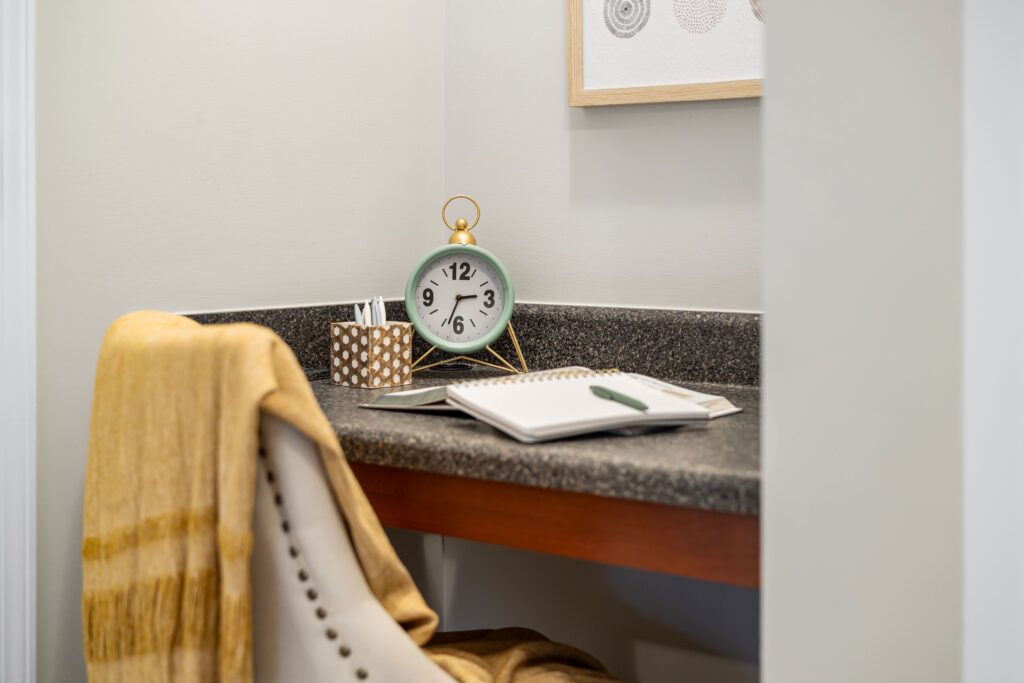
Working from home in a small house or flat does not need a spare room. It needs a plan. A desk squeezed into a bedroom corner, a landing nook, or even a cupboard under the stairs can work well when the layout, storage and lighting are thought through. The best small home office ideas are not about buying more furniture. They are about choosing the right pieces, keeping surfaces clear, and making the space comfortable enough to sit in for hours. This guide covers practical small home office ideas for UK homes, from alcoves and box rooms to shared living spaces. Every idea works in a real home, not a showroom, and most of them cost very little.
Start With The Space You Actually Have
Before buying anything, look at the room with fresh eyes. The most useful small home office ideas start with measuring, not shopping. Measure the width of the wall or alcove you plan to use, the depth you can spare without blocking a walkway, and the height of any windowsill or radiator underneath. A desk that is 100 to 120 centimetres wide and 50 to 60 centimetres deep suits most laptops and a monitor, and it fits into spaces that a standard 140-centimetre desk never will. Corners are the easiest win in a small room. A corner desk, or a straight desk pushed into a corner, uses dead space and gives you two walls to work with. One wall can hold a shelf or a pinboard, the other a small lamp. Alcoves beside a chimney breast, the end of a landing, and the space under a staircase all make surprisingly good offices because they feel separate from the rest of the room, which helps you switch off at the end of the day. A rug under the desk or a different paint colour on one wall can mark the office zone without building anything. Think about light and power before you commit to a spot. A desk near a window gives you daylight, which is easier on the eyes and makes a small room feel larger, but check for glare on your screen in the afternoon. You also need a socket within reach. Running an extension lead across a doorway is a trip hazard and looks untidy, so pick a spot with power nearby or plan a cable route along a skirting board.
Choose A Desk That Fits The Room, Not The Other Way Round
The desk is the heart of the setup, and in a small home office it has to earn its floor space. A wall-mounted folding desk is one of the best small home office ideas for very tight rooms, because it folds flat against the wall when you finish work. A narrow console desk, a slim writing desk, or a shelf fitted at desk height with a pair of brackets can all work, as long as the surface is deep enough for your keyboard and your forearms. Depth matters more than width. A desk only 45 centimetres deep can still hold a laptop comfortably, and it leaves more room to move behind your chair. If you use an external monitor, a monitor arm clamped to the back of the desk frees up the surface underneath it, which is often enough space for a notebook and a mug. Consider a desk with built-in storage only if it does not eat into legroom. Drawers under the desktop are useful, but a pedestal that blocks your knees will make long days miserable. A plain desktop with storage on the wall above it is often the better option in a small room. Your chair deserves as much thought as your desk. A proper office chair with adjustable height and lumbar support is worth the space it takes, because a dining chair will leave your back aching by mid-afternoon. If space is really tight, look for a compact task chair with a small footprint, or a folding chair you can hang on a hook when the working day ends. Whatever you choose, set it so your feet rest flat on the floor and your screen sits at eye level, with the top of the screen roughly in line with your eyes.
Small Home Office Ideas For Storage That Stays Out Of Sight
Clutter is the enemy of a small office. When every item is visible, the room feels smaller and your mind feels busier. The trick is to give everything a home, preferably behind a door or inside a box, so the desk surface stays clear. Wall space is your best friend. Floating shelves above the desk hold books, files and plants without taking a single centimetre of floor. A pegboard lets you hang scissors, cables, headphones and notes in a tidy grid, and you can rearrange it whenever your needs change. A slim wall cabinet with a drop-down front can hide a whole office’s worth of supplies in the depth of a picture frame. Use the space under the desk too. A small set of drawers on castors slides underneath when you are not using it, and a basket or fabric box under the desk holds chargers and notebooks out of sight. If your desk sits in a bedroom, a storage ottoman can double as a seat for visitors and a hiding place for office clutter. Go vertical wherever you can. Tall, narrow shelving units fit into gaps that wide furniture cannot, and they draw the eye upward, which makes a low-ceilinged room feel taller. Label your boxes and files so you can find things without pulling everything out.
Lighting That Makes A Small Room Feel Bigger
Good lighting changes everything in a small home office. Daylight is the best light you can get, so place your desk side-on to a window if possible. Facing the window directly can cause glare, and sitting with your back to it puts your own shadow across the desk. Side-on gives you light without the problems. For the hours when daylight fades, and in a British winter that is most of the working day, you need a good desk lamp. Choose one with an adjustable arm so you can aim the light at your work rather than into your eyes, and pick a warm white bulb, around 2700 to 3000 kelvin, which feels comfortable for long sessions. A lamp with a small footprint, or one that clamps to the desk edge, keeps the surface clear. Layer the light. A single overhead bulb casts harsh shadows and makes a small room feel flat. A desk lamp plus a small floor lamp or a wall light in the corner gives the room depth and makes it feel larger. If your office is in a windowless corner, a daylight bulb can make the space feel less gloomy, and a mirror on the opposite wall bounces light around the room.
Keep Cables, Clutter And Noise Under Control
Cables are the fastest way to make a small office look messy. A cable tray or a simple cable tidy fixed under the desk gathers chargers and power strips out of sight. Velcro ties keep the cables that run to your laptop bundled together, and a single multi-port charger can replace three separate plugs. If your router lives in another room, a powerline adapter or a mesh Wi-Fi unit can give your office a stable connection without a long ethernet cable trailing through the house. Noise is another small-room problem, especially if you share the house with family or flatmates. A pair of good headphones is often more practical than trying to soundproof a corner. A rug under the desk and a few soft furnishings absorb sound and make video calls clearer. Finish each working day with a two-minute reset: clear the desk, file loose papers, and put the chair back, because a small office only stays usable if clutter never builds up.
Make It Comfortable Enough To Work In All Day
A small office still has to be a healthy place to work. The Health and Safety Executive’s guidance on display screen equipment applies to home workers as well as office workers, and the basics are straightforward: your screen at eye level, your keyboard and mouse close enough that your shoulders stay relaxed, and regular breaks from sitting. A laptop stand and a separate keyboard and mouse make a big difference, and they cost far less than a new desk. Plants earn their place in a small office. A single small plant on the desk or a trailing plant on a shelf adds colour and life without taking useful space. Choose something hard to kill, such as a spider plant or a pothos, if you are not a natural gardener.
Budget-Friendly Small Home Office Ideas
You do not need to spend hundreds of pounds. A second-hand desk from a local marketplace, a shelf bracket and a plank of wood from a DIY store, or a folding table you already own can all become a perfectly good office. Paint is the cheapest transformation there is: a single accent wall in a calm colour, such as sage green or soft blue, makes a corner feel like a deliberate workspace rather than a desk shoved against a wall. Shop your own home first. A bedside table can become a printer stand, a kitchen trolley can hold office supplies and wheel away when guests come, and a bookcase you already own can frame the office zone. Buy the chair first and the decorations last, because comfort decides whether you will actually use the space. If you are employed and your employer requires you to work from home, check the tax position before assuming you can claim anything. From the tax year starting 6 April 2026, employees cannot claim tax relief for working from home from HMRC, although claims for the four previous tax years remain open if you qualified then, and your employer can still pay you up to £6 a week tax-free towards homeworking costs. Check the current GOV.UK guidance, as the rules have changed recently.
Bringing It All Together
A good small home office is not about the size of the room. It is about a desk that fits, storage that hides the mess, light that flatters the space, and a chair you can sit in all day. Start with the spot, measure twice, and build the setup around how you actually work. The result is a workspace that feels calm, looks tidy, and lets you close the laptop at the end of the day and walk away from work, even when work lives in the corner of your bedroom. If you have more space outdoors, see our garden office ideas.
Frequently Asked Questions
What Is The Smallest Space That Works As A Home Office?
A space about 120 centimetres wide and 60 centimetres deep is enough for a laptop, a notebook and a lamp, which is roughly the size of a wardrobe alcove or the end of a landing. A corner, a cupboard under the stairs, or a wide windowsill with a shelf can all work if you have power nearby and room to sit comfortably.
How Do I Make A Small Home Office Look Tidy?
Hide as much as possible. Use closed storage, such as boxes, drawers and cupboards, rather than open piles. Keep only the items you use every day on the desk, run cables through a tray under the desk, and finish each day with a two-minute reset so clutter never builds up.
What Desk Size Is Best For A Small Home Office?
A desk 100 to 120 centimetres wide and 50 to 60 centimetres deep suits most people working on a laptop, with or without an external monitor. If you only use a laptop, a desk as narrow as 45 centimetres deep can work. Measure your space first, including legroom and the space behind your chair, before you buy.
Leave a Reply