
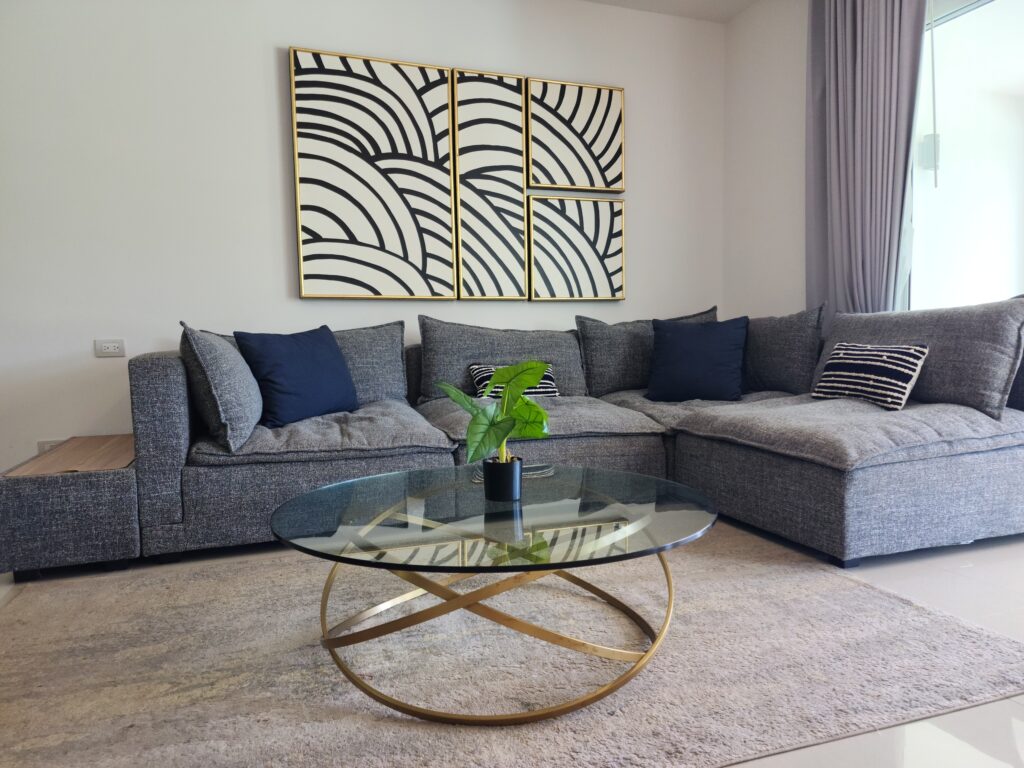
A grey sofa is one of the safest buys in home decor, and also one of the easiest to get wrong. Choose the right shade, pair it with the right colours, and it looks calm, elegant and expensive. Get the pairing wrong, and the room can feel cold, flat and unfinished. The good news is that grey is the most forgiving neutral there is. It works with almost every colour, from blush pink to mustard yellow, and it suits every style, from a small city flat to a large family living room. This guide covers grey sofa living room ideas that actually work in real homes: how to pick the right shade of grey, which colours to pair it with, how to choose cushions and rugs, and how to arrange the room around the sofa so it feels like the centrepiece rather than an afterthought.
Pick The Right Shade Of Grey First
Not all greys are the same. A pale dove grey feels light and airy and suits small rooms, while a mid grey works in most spaces, and a dark charcoal grey makes a bold statement in a larger room with good light. The most important thing to check is the undertone. Some greys lean warm, with a hint of beige or brown, and others lean cool, with a hint of blue. A cool grey sofa next to warm cream walls can look mismatched, so hold fabric swatches against your walls, your floor and your curtains in daylight before you commit. If your room is small or north-facing, a lighter grey is usually the better choice, because it reflects more light and stops the room feeling gloomy. Dark grey sofas look best in rooms with plenty of natural light, or with strong artificial lighting, because a charcoal sofa in a dark corner can disappear into the shadows. If you already own a dark grey sofa and the room feels heavy, lighter cushions, a pale rug and a light-coloured throw can lift it without replacing anything. Fabric matters too. A velvet grey sofa looks luxurious and catches the light beautifully, but it shows marks more easily. A linen-look fabric feels relaxed and casual, while grey leather is practical for families and pets. Whatever you choose, ask for a fabric sample and live with it for a few days before ordering.
Colour Pairings That Work With A Grey Sofa
Grey’s greatest strength is that it goes with almost anything, but some combinations are more successful than others. Here are the pairings that interior designers return to again and again. Mustard yellow and grey is a classic for a reason. The warmth of mustard lifts a cool grey sofa and adds energy to the room without overwhelming it. A couple of mustard cushions, a throw, or a piece of art on the wall is enough. You do not need to paint a wall yellow to make it work. Blush pink and pale grey is soft, calm and popular in bedrooms and living rooms alike. It suits a light grey sofa best, and it works well with pale wood, white walls and a few metallic touches such as brass or copper. Navy blue and grey is a more grown-up combination. A navy accent wall behind a grey sofa, or navy cushions and curtains, gives the room depth and a smart, tailored feel. It works particularly well with a mid or dark grey sofa. Green is one of the easiest partners for grey. Sage green walls, olive cushions, or a large houseplant next to the sofa add life and colour without clashing. If you like a bolder look, emerald green cushions on a charcoal sofa look rich and dramatic. For a calm, minimal look, pair your grey sofa with white, cream and natural wood. This combination never dates, and it lets the texture of the sofa and the soft furnishings do the talking. Add black in small doses, such as a picture frame, a lamp base or a side table, to stop the room feeling washed out.
Cushions, Throws And Texture
A grey sofa without cushions looks unfinished. Cushions are where you add colour, pattern and personality, and they are the cheapest way to change the look of a room. The trick is to mix sizes, textures and patterns rather than buying a matching set. Start with two larger cushions in a plain colour that matches your chosen accent, then add one or two smaller cushions in a pattern, such as a geometric print, stripes or a floral. Mix textures too: velvet against linen, a knitted cushion next to a smooth cotton one. The contrast is what makes the sofa look styled rather than staged. A throw draped over one arm or folded across the back adds warmth and makes the sofa look inviting. In winter, a chunky knitted throw in cream or mustard is cosy. In summer, a light cotton throw in a pale colour keeps things fresh. Do not overdo it. One throw and three to five cushions on a three-seater sofa is usually enough. More than that, and the sofa starts to look cluttered.
Choose A Rug That Grounds The Sofa
The rug is what ties a grey sofa into the room. A rug that is too small makes the sofa look like it is floating, so choose one large enough that the front legs of the sofa sit on it. As a guide, the rug should extend at least 15 to 20 centimetres beyond the sofa on each side. Colour-wise, the rug can either blend in or make a statement. A pale rug with a subtle pattern lightens a dark grey sofa and makes a small room feel bigger. A patterned rug in muted tones, such as a faded Persian-style design, adds character without fighting the sofa. A bold rug in a strong colour, such as deep blue or terracotta, can anchor the whole room, but keep the cushions calmer if the rug is loud. Texture matters underfoot as well as under the eye. A thick pile rug feels luxurious and warm, which suits a living room where you spend evenings barefoot. A flat-weave rug is easier to clean and better for homes with pets or small children. If your floor is wooden, a rug also protects it from the sofa legs and softens the sound of the room.
Living Room Layouts Around A Grey Sofa
The layout decides whether your grey sofa is the hero of the room or just a piece of furniture pushed against a wall. In most living rooms, the sofa works best facing the room’s focal point, which is usually the television, a fireplace, or a large window. If the room is long and narrow, placing the sofa along the longest wall leaves a clear walkway and stops the room feeling cramped. In an open-plan space, a grey sofa can act as a room divider. Place it with its back to the dining area and the seating area suddenly feels like its own room. A console table behind the sofa, with a lamp and a few books, finishes the divide and gives you somewhere to put a drink. Leave breathing room around the sofa. A gap of at least 45 centimetres between the sofa and the coffee table lets you walk through comfortably, and a side table within arm’s reach means you never have to balance a cup on the sofa arm. If the room is small, a round coffee table works better than a rectangular one, because there are no sharp corners to bump into and it softens the straight lines of the sofa. For a sociable layout, add an armchair at an angle to the sofa rather than opposite it, which feels less formal and makes conversation easier. A floor lamp in the corner behind the armchair gives you a reading spot and adds a warm pool of light in the evening.
Finishing Touches That Complete The Look
The details around a grey sofa are what make the room feel finished. Curtains in a colour that echoes the cushions tie the room together. A large mirror on the opposite wall bounces light around and makes a small room feel bigger. Art above the sofa should be roughly two-thirds the width of the sofa, hung so its centre sits at eye level when you are standing. Houseplants are a grey sofa’s best friend. The green of a large plant softens the grey and adds life to the room. Keep the coffee table styled but simple: a stack of two or three books, a small candle, and a vase or a bowl is enough.
Common Mistakes To Avoid
The most common mistake with a grey sofa is making the whole room grey. Grey walls, a grey sofa, grey cushions and a grey rug together look flat and cold. Add at least one warm colour and one contrasting texture to break it up. Wood, brass, rattan and plants all add warmth. Another mistake is choosing a grey that fights the room’s light. A cool blue-grey in a north-facing room can feel icy, while a warm grey in a sunny south-facing room can look beige. Always check your swatches in the room itself, at different times of day, before you buy paint or fabric. For small spaces, see our ideas for compact bathrooms.
Bringing It All Together
A grey sofa is a brilliant starting point for a living room because it works with almost any colour and any style. Pick a shade that suits your room’s light, choose one or two accent colours and repeat them in cushions, curtains and art, add a rug big enough to ground the sofa, and arrange the furniture so the room feels easy to move around and sit in. Get those four things right and your grey sofa will look deliberate, stylish and welcoming for years.
Frequently Asked Questions
What Colour Goes Best With A Grey Sofa?
Mustard yellow, blush pink, navy blue and sage green all work beautifully with a grey sofa. Mustard adds warmth, blush pink feels soft and calm, navy gives a smart tailored look, and green adds life. For a minimal look, pair grey with white, cream and natural wood, and add black in small doses for contrast.
How Do I Stop My Grey Sofa Looking Cold And Boring?
Add warmth through colour and texture. Choose cushions in a warm accent colour, add a knitted or velvet throw, use wooden furniture or brass details, and place a houseplant nearby. A rug in a warm tone also helps, and warm white lighting feels cosier than cool white bulbs in the evening.
What Colour Rug Goes With A Grey Sofa?
A pale rug with a subtle pattern lightens a dark grey sofa, while a patterned rug in muted tones adds character. A bold rug in deep blue or terracotta can anchor the room. Whatever colour you choose, make sure the rug is large enough that the front legs of the sofa sit on it.
Should My Grey Sofa Match My Grey Walls?
It is better if they do not match exactly. A sofa in the same grey as the walls can look flat and washed out. Choose a sofa a few shades lighter or darker than the walls, or pick a grey with a different undertone, so the sofa stands out. Adding cushions in a contrasting colour also helps the sofa feel separate from the wall.
Leave a Reply