
Keswick is the Lake District’s northern hub, a compact market town sitting between Derwentwater and the great northern fells. It is busy because it deserves to be. Within a short walk of the Market Square you will find one of England’s most beautiful lakes, the country’s most-walked short fell, a stone circle around five thousand years old, a working slate mine, a theatre on the lakeshore and a Saturday market worth planning your visit around. The town itself is small enough to explore on foot, yet the scenery around it is among the finest in England. Whether you come to walk, to cruise the lake or simply to eat well and look at mountains, these are the best things to do in Keswick.
Why Visit Keswick
Keswick works as a base for almost any kind of Lake District trip. Serious walkers use it as a launchpad for Skiddaw, Blencathra and the Borrowdale valley, while families and first-time visitors find plenty to enjoy without climbing a mountain at all. The town has a good range of pubs, cafes and independent shops, and the lakeshore is a five-minute walk from the centre.
Cruise Derwentwater On The Keswick Launch
Derwentwater stretches three miles south of Keswick town centre and is often described as the most beautiful lake in England. Wooded shores, small islands and dramatic fells ring the water, and the best way to take it all in is from the lake itself. The Keswick Launch runs a circuit of the lake with seven landing stages, operating year-round with a reduced winter timetable from November to March. You can ride the full circuit, hop off at a landing stage for a walk and catch a later boat back, or combine a one-way cruise with the Catbells climb on the western shore. Dogs travel free on the launches. If you would rather stay on dry land, the full circular walk around Derwentwater is roughly ten miles and takes four to five hours at a relaxed pace. Shorter sections are easy to manage, and the path is mostly flat and well maintained. Either way, the lake is the heart of a Keswick visit, and it looks different at every hour of the day.
Climb Catbells, The Lake District’s Favourite Fell
Rising to 451 metres on the western shore of Derwentwater, Catbells is arguably the most popular fell walk in England and the classic first fell for visitors to the Lake District. The standard route is a circular walk of around three and a half to four miles, taking two to three hours, with a short but proper ridge to climb and huge views from the summit. From the top, the panorama takes in Derwentwater below, Skiddaw and Blencathra to the north, and the Borrowdale valley running away to the south. On a clear day it is one of the finest viewpoints in the Lakes. The walk is family-friendly and well trodden, and it is manageable for most reasonably fit walkers, including older children. Start from the Hawse End car park, arriving before 9am in summer to secure a space, or take the Keswick Launch to the Hawse End landing stage and walk from there. Wear proper walking shoes and carry waterproofs, as the weather on the fells can change quickly even on a fine morning in town.
Stand Among The Stones At Castlerigg Stone Circle
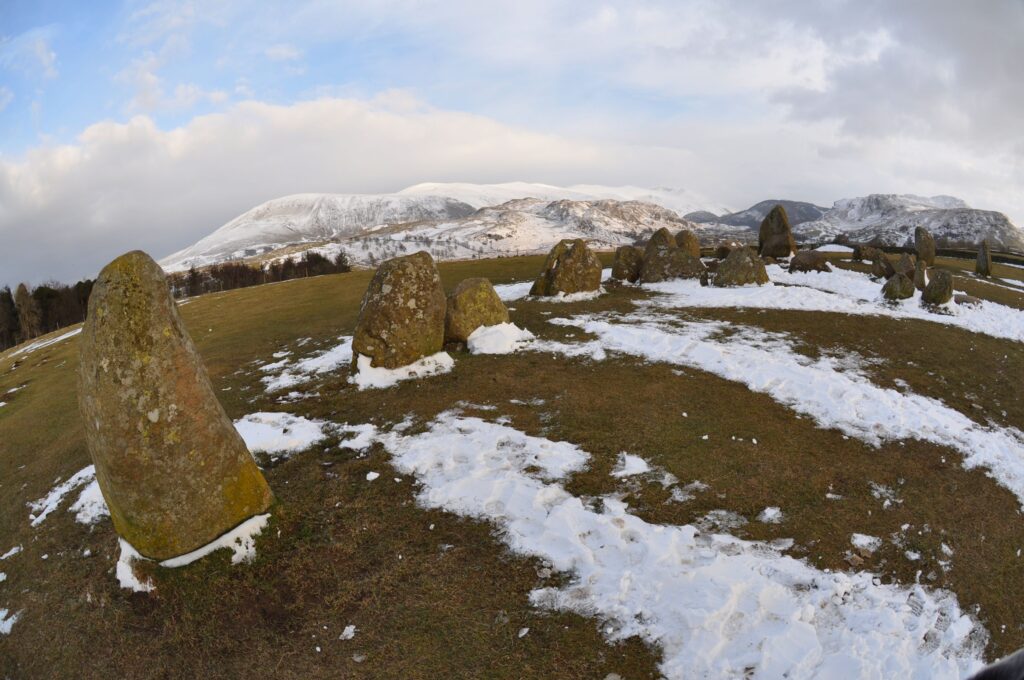
Set on a raised plateau east of Keswick, Castlerigg Stone Circle is one of Britain’s oldest and most atmospheric stone circles. Archaeologists date its construction to around 3000 BCE, roughly the same era as the earliest phase of Stonehenge. Thirty-eight stones of varying height, the tallest around 2.4 metres, form an oval roughly 30 metres across, ringed by a 360-degree panorama of mountains. Entry is free and the site is open at all hours, which makes sunrise and sunset visits particularly dramatic. Castlerigg is about a twenty-minute walk, or 1.2 miles, east of Keswick town centre along a signposted footpath through farmland. English Heritage manages the monument, but there is no visitor centre, so it is worth reading up on the history before you go or joining a guided walk from town. Allow thirty minutes to an hour at the circle itself, and longer if you walk there and back. It is a quiet, open place, and early morning is the best time to have it almost to yourself.
Walk To Friar’s Crag And Castle Head
Not every great view in Keswick needs a fell climb. Friar’s Crag is a short, flat lakeshore walk from the town centre to a rocky headland on Derwentwater, and the view from it has been admired for generations. The writer John Ruskin called it one of his earliest memories and one of the finest views in Europe, and a slate memorial to him sits on the crag. It is the classic first walk for visitors arriving in Keswick, and it is suitable for pushchairs and for anyone who wants beauty without effort. For a slightly bigger reward, climb Castle Head, the wooded knoll on the Borrowdale side of town. The walk takes about an hour in total, and from the bench at the top the whole of Derwentwater is laid out below: the islands, the launches, Catbells along the western shore and Borrowdale running south. For the effort involved, it offers one of the best view-to-effort ratios anywhere near Keswick.
Explore Keswick’s Saturday Market And Town Centre
Keswick’s market is one of the liveliest in the Lake District, and the Saturday market in particular is worth structuring your day around. Stalls fill the Market Square with local produce, baked goods, crafts and outdoor gear, and the surrounding streets are lined with independent shops, cafes and pubs. The town centre is compact, with everything a five-minute walk from the square, so an hour spent wandering between the market and the shops is an easy pleasure. Beyond the market, Keswick has a few attractions that surprise first-time visitors. The Pencil Museum, often described as much better than it sounds, tells the story of the pencil industry that began in the area and is a fun stop on a wet afternoon. The Theatre by the Lake, on the lakeshore at the southern edge of town, stages plays and performances through the year. Both are easy to fit into a day between walks.
Discover Ashness Bridge, Surprise View And Borrowdale
The road south from Keswick through Borrowdale is one of the most dramatic drives in England, and it is worth taking even if you only go as far as Ashness Bridge. The little stone packhorse bridge above Derwentwater is one of the most photographed spots in the Lakes, and a short drive further brings you to Surprise View, a near drive-to viewpoint with a dizzying look straight down onto the lake. The valley beyond is narrow and wooded, with the River Derwent running through it and the crags rising steeply on either side. If you have a car, allow a couple of hours for the drive, with stops at the bridge and the viewpoint. Walkers can reach the same area on foot from Keswick, though the distances are longer.
Take It Easy At Walla Crag And Latrigg
If Catbells is busy or you want a quieter fell, Walla Crag is a good alternative. At 379 metres on the eastern side of Derwentwater, it offers a superb lake panorama and, for many walkers, views to match Catbells with a fraction of the crowds. Latrigg is easier still: a gentle path from the edge of town leads to a grandstand view over Derwentwater and the northern fells, and it is a favourite for an evening walk at sunset.
Enjoy Whinlatter Forest And Family Days Out
Ten minutes from Keswick by car, Whinlatter Forest is England’s only true mountain forest, with walking trails, mountain-bike routes, a Gruffalo spotters trail for children, a Go Ape course and a wild play zone. Back in town, the lake offers rowing boats, paddleboarding and kayaking for hire in the warmer months, and alpaca walks run from the Lingholm Estate on the shores of Derwentwater, with views across the lake towards Catbells.
Where To Eat And Drink In Keswick
Keswick has a serious concentration of good pubs and restaurants for a town its size. The Dog and Gun is a well-known stop for a pint after a walk, and the pubs around the Market Square serve hearty food through the day. Bryson’s Bakery is a local favourite for a post-walk lunch, and the cafes near the lakeshore are good for a coffee with a view.
Getting To Keswick And Getting Around
Keswick sits in the north of the Lake District National Park, in Cumbria. There is no railway station in the town itself; the nearest stations are Penrith and Carlisle, both connected by bus to Keswick. Drivers arrive via the A66, and the town has several car parks, though they fill early on fine weekends and in school holidays. Once you are in Keswick, the centre and the lakeshore are walkable, and the Keswick Launch connects the lake’s landing stages. Buses run from the town to Borrowdale, Buttermere and other valleys, which makes car-free walking possible.
Best Time To Visit Keswick
Keswick is a year-round destination, but the character of a visit changes with the season. Late spring and summer bring the longest days, the busiest fells and the fullest launch timetable, along with the biggest crowds. Autumn is a fine time to visit: the crowds thin, the woodland around Derwentwater turns gold, and the walking is often at its best. Winter is quiet and atmospheric, with a reduced launch timetable from November to March.
Plan Your Day In Keswick
A classic Keswick day starts with Catbells in the morning, aiming for the summit before the crowds build, followed by lunch at the Saturday market or a bakery in town. Spend the afternoon on a Keswick Launch cruise around Derwentwater, then finish with a drink at the Dog and Gun. On a second day, walk out to Castlerigg Stone Circle in the morning, drive the Borrowdale road to Ashness Bridge and Surprise View in the afternoon, and end the day at Friar’s Crag as the light fades over the lake. Keswick rewards early starts and unhurried afternoons. See also our Inverness and Brighton guides.
FAQs
How Many Days Do You Need In Keswick?
Two days is a good minimum: one for Catbells and Derwentwater, and one for Castlerigg Stone Circle, the Borrowdale road and the town itself. Three or four days lets you add Skiddaw or Blencathra, Whinlatter Forest and a longer lakeshore walk without rushing.
Is Catbells Suitable For Beginners?
Yes. Catbells is the classic first fell in the Lake District: 451 metres high, with a circular route of around three and a half to four miles taking two to three hours. It is family-friendly and well trodden, but it is still a proper fell walk, so wear walking shoes and carry waterproofs.
How Long Does It Take To Walk Around Derwentwater?
The full circular walk around Derwentwater is roughly ten miles and takes four to five hours at a relaxed pace. Shorter sections are easy to manage, and the Keswick Launch lets you shorten the walk by taking a boat for part of the circuit.
Is Castlerigg Stone Circle Free To Visit?
Yes. Castlerigg Stone Circle is free to enter and open at all hours. It is about a twenty-minute walk east of Keswick town centre, and English Heritage manages the site, though there is no visitor centre there.
What Is The Best Time Of Year To Visit Keswick?
Late spring to early autumn offers the longest days and the fullest range of activities, while autumn brings quieter paths and golden woodland. Winter is atmospheric but has a reduced launch timetable and a higher chance of bad weather on the fells, so check conditions before walking.
Leave a Reply