
Inverness is the capital of the Scottish Highlands, and it is the perfect base for exploring one of the most beautiful parts of Britain. The city sits where the River Ness meets the Moray Firth, with Loch Ness a short drive to the south-west and the battlefield of Culloden a short drive to the east. It is a small city, easy to walk around, with a castle on a hill above the river, a Victorian market, and a riverside walk that locals love. Yet its position makes it feel much bigger than it is: from here you can reach the North Coast 500, the Cairngorms, and the Black Isle, as well as some of Scotland’s most famous historic sites.
Start At Inverness Castle And The River Ness
Inverness Castle sits on a red sandstone cliff above the River Ness, and it is the best place to begin any visit. A fortification has stood on this site for centuries, and the Jacobite army destroyed an earlier castle here in 1746, just weeks before the Battle of Culloden. The building you see today dates from 1836, when it was built as a sheriff courthouse, and it has now reopened as the Inverness Castle Experience, telling the story of the Highlands through exhibitions, storytelling, and hands-on displays. The South Tower has a roof terrace with panoramic views over the city, and the terrace by the statue of Flora MacDonald, the Highland woman who helped Bonnie Prince Charlie escape after Culloden, gives a fine view down the river. Allow around two hours for the castle experience. From the castle, walk down to the river, where the Greig Street suspension bridge and the Ness Bridge cross the water.
Walk The Ness Islands And The Riverside
The walk along the River Ness to the Ness Islands is one of the best short walks in any Scottish city. The islands are a chain of wooded islands in the river, linked by Victorian footbridges, with paths running under tall Scots pines and beeches. The circuit starts about fifteen minutes on foot from the castle along the riverbank, and the paths are flat and easy, though wet leaves can make them slippery. On the far bank, Inverness Cathedral, also known as St Andrew’s Cathedral, stands facing the castle across the water. The river itself is short, only around six miles long, flowing from the northern end of Loch Ness through to the Beauly Firth, and it is the origin of the city’s name, from the Scottish Gaelic Inbhir Nis, meaning mouth of the Ness.
Take A Trip To Loch Ness And Urquhart Castle
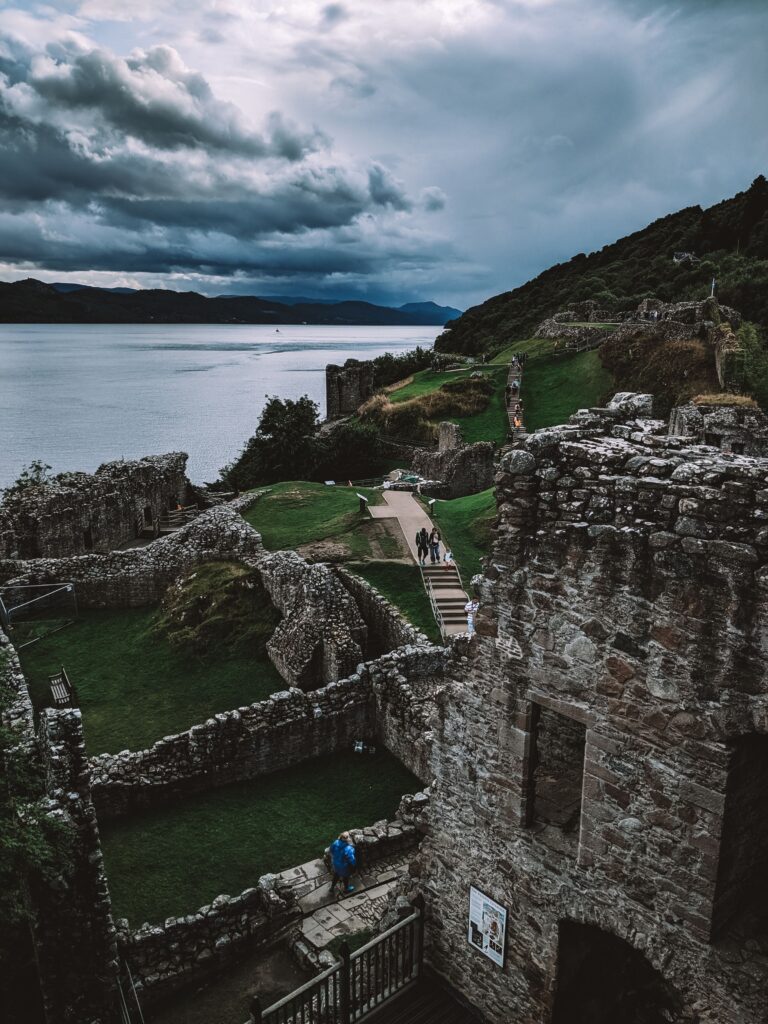
No visit to Inverness is complete without a trip to Loch Ness. The loch stretches around 37 kilometres south-west of the city, and it holds more fresh water than all the lakes in England and Wales combined. Its dark, peaty water and the legend of the Loch Ness Monster, Nessie, have made it the most famous loch in the world. The monster story is often traced to the year 565, when St Columba is said to have encountered a large creature in the River Ness. You can reach the northern shore of the loch in around fifteen minutes by car, and boat cruises leave from points along the shore, including Dochgarroch and near Drumnadrochit, mostly from spring to autumn. The most popular stop is Urquhart Castle, about 25 kilometres from Inverness on the western shore. The ruined castle dates back to the thirteenth century, and it is one of Scotland’s most photographed ruins. Tickets are for a set date and time, so book ahead.
Visit Culloden Battlefield And Clava Cairns
About eight kilometres east of Inverness, Culloden Moor is one of the most important and moving sites in Scottish history. This is where the last pitched battle on British soil was fought, on 16 April 1746, when the Jacobite rising ended in defeat. The National Trust for Scotland manages the site, and its visitor centre has an exhibition explaining the events leading up to the battle and what followed, including a 360-degree immersive film. Walking the open moor is a solemn experience: red flags mark the government line, blue flags mark the Jacobite line, and clan markers show where each Highland regiment fell. Allow at least two hours. Nearby, the Clava Cairns are a prehistoric Bronze Age cemetery, first used around 4,000 years ago, with burial cairns surrounded by a stone circle. The two sites sit close together and are easy to combine in a single morning.
Browse The Victorian Market And The City Centre
Back in the city centre, the Victorian Market is a good place to spend an hour. The covered arcade off Academy Street opened in 1870 and was rebuilt after a fire, and under its glass and iron roof you will find local crafts, food stalls, and independent shops. It is a useful stop for lunch, with a food hall of Highland food stalls, and for picking up Scottish gifts. Around the market, the city centre has a mix of high street shops, independent stores, and cafes, and Falcon Square, with its Mercat Cross, is a handy meeting point. The Inverness Museum and Art Gallery, on Castle Wynd near the castle, covers the history and culture of the Highlands and is a good wet-day option. In the evening, the city’s pubs often have live music, and the riverside restaurants are popular for dinner.
Watch Dolphins At Chanonry Point On The Black Isle
One of the most memorable day trips from Inverness is also one of the cheapest. Drive north across the Kessock Bridge and you reach the Black Isle, a peninsula rather than a real island. At its far end, Chanonry Point is one of the best places in Europe to see bottlenose dolphins from the shore. The Moray Firth is home to around 200 bottlenose dolphins, and at Chanonry Point they chase salmon through the narrow channel, often only a few metres from the beach. The best time to see them is usually on a rising tide, from around one hour after low tide, when the fish come in. There is no guarantee of seeing dolphins, so check the tide times and allow plenty of time. The main viewing area is a shingle beach behind the lighthouse, reached by a path from the car park. The nearby villages of Fortrose and Rosemarkie are worth a wander too, with a ruined thirteenth-century cathedral at Fortrose and a long sandy beach at Rosemarkie.
Explore Fort George, Cawdor Castle And Glen Affric
There are several more day trips within easy reach of Inverness. Fort George, on the Moray Firth to the east, is one of the largest artillery fortifications in Europe, built in the eighteenth century after the Jacobite rising. It is still a working military base, and it holds the Highlanders’ Museum, which tells the story of the Highland regiments from Culloden to the present day. Cawdor Castle, about fifteen miles east of Inverness near Nairn, is a fifteenth-century castle with three gardens, famous for its connection to Shakespeare’s Macbeth. Note that it closes for the winter and reopens in spring, so check before you travel. For scenery, Glen Affric, around forty minutes away, is one of the most beautiful glens in Scotland, with a loch, ancient Caledonian pine forest, and walking trails.
Practical Tips For Visiting Inverness
Inverness is the starting point of the North Coast 500, the 516-mile coastal touring route that loops around the north of Scotland, so the city is busy in summer with touring visitors. Book accommodation early if you are travelling between June and September. The city centre is compact and walkable, and most of the sights in this guide are within a short walk of each other. Trains run from Edinburgh, Glasgow, and Aberdeen, and the station is in the city centre, a few minutes from the river. If you want to explore Loch Ness, Culloden, and the Black Isle properly, a car is the easiest option, though buses and organised tours cover the main sights. Highland weather changes quickly, so bring a waterproof jacket and layers in every season, and check opening times and ticket prices before you travel, as many attractions have seasonal hours.
A Simple Two Day Itinerary In Inverness
If you have two days, spend the first in the city: the castle experience in the morning, the Ness Islands and the riverside in the afternoon, and the Victorian Market and a pub dinner in the evening. On the second day, head to Culloden Battlefield and Clava Cairns in the morning, then drive to Loch Ness and Urquhart Castle in the afternoon, or take a boat cruise on the loch. If you have a third day, add Chanonry Point for the dolphins, or a drive into Glen Affric.
Inverness is a city that works as both a destination and a doorway. The castle, the river, and the market give you a full day in the city itself, while Loch Ness, Culloden, the Black Isle, and the glens give you reasons to stay longer. The Highlands are at their most accessible here, and the city makes a comfortable base for exploring them. Plan around the big sights, allow for the weather, and check the practical details before you go. For more ideas for British breaks, see our guides to things to do in Bristol and things to do in York, or plan a historic city break with our guide to things to do in Chester.
Frequently Asked Questions About Things To Do In Inverness
How Many Days Do You Need In Inverness?
Two full days are ideal: one day for the city, including the castle, the Ness Islands, and the Victorian Market, and one day for Culloden and Loch Ness. A third day lets you add Chanonry Point or Glen Affric.
Is Loch Ness Close To Inverness?
Yes, Loch Ness begins just a few miles south-west of Inverness city centre. You can reach the northern shore in around fifteen minutes by car. Urquhart Castle, the most popular attraction on the loch, is about 25 kilometres from the city.
Can You See Dolphins Near Inverness?
Yes, Chanonry Point on the Black Isle, about 25 kilometres from Inverness, is one of the best places in Europe to see bottlenose dolphins from the shore. The best chance is usually on a rising tide, from around one hour after low tide, but sightings are never guaranteed.
What Is The Best Time Of Year To Visit Inverness?
Late spring and early autumn are often the best times, with milder weather and smaller crowds than the summer peak. Winter is quieter, but some attractions, such as Cawdor Castle and some boat cruises, close or run reduced hours.
Is Inverness A Good Base For The North Coast 500?
Yes, Inverness is the start and end point of the North Coast 500, the 516-mile coastal route around the north of Scotland. The city has the widest choice of accommodation, transport, and supplies before you set off.
Leave a Reply