
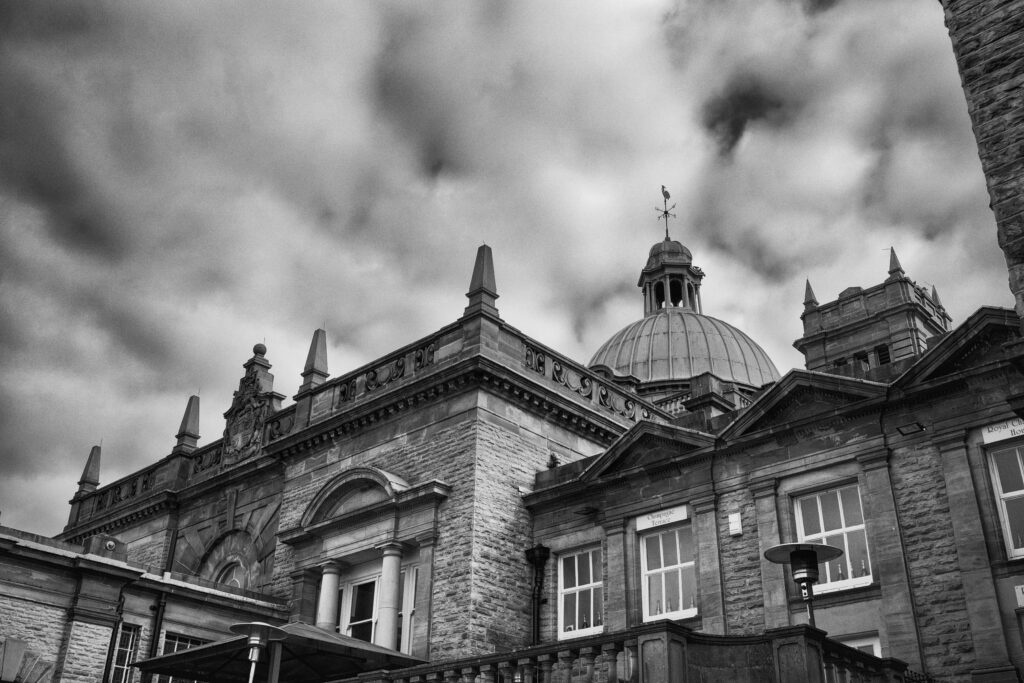
Harrogate is one of those English towns that rewards a slow pace. Tucked into the foothills of the Yorkshire Dales, this former spa town built its name on mineral-rich springs in the eighteenth and nineteenth centuries, when visitors arrived to drink the sulphur water and take the baths. The spa era has long passed, but what it left behind is a remarkably graceful town: wide boulevards, elegant Victorian buildings, formal gardens and a tea-room culture that still draws visitors from across the country. Whether you have a single day or a relaxed weekend, the best things to do in Harrogate mix gentle sightseeing with proper pampering.
Why Visit Harrogate
Harrogate suits travellers who like their days unhurried. The town centre is compact and easy to explore on foot, and most of its headline attractions sit within a short walk of each other. You can soak in a Victorian bathhouse in the morning, wander through acres of gardens in the afternoon and finish the day with afternoon tea in a room that has barely changed in a century. It is also a useful base for the Yorkshire Dales, with the market town of Knaresborough and the stately Ripley Castle both a short drive away. Families, couples and solo travellers all find something here, and because so much of the pleasure is in the parks and streets themselves, a visit does not have to cost very much at all.
Relax At The Turkish Baths Harrogate
The Turkish Baths are the single most distinctive of all Harrogate attractions, and the best place to start. Opened in 1897, the baths are one of the few Victorian Turkish bath complexes in Britain still operating much as originally intended. Inside, the Moorish-style interior is genuinely ornate, with tiled steam rooms, warm heated chambers and a plunge pool at the centre of the experience. A typical session lasts a couple of hours and follows a slow circuit of warming rooms, steam and a cold plunge, which is exactly the unhurried rhythm the Victorians had in mind. Sessions run on a rotating schedule of men-only, women-only and mixed sessions, so it is worth checking the timetable before you go. Booking well ahead is sensible, particularly at weekends, as sessions can sell out. The baths sit on Parliament Street, close to the town centre, which makes them easy to combine with a walk through the Montpellier Quarter afterwards.
Stroll Through Valley Gardens
Valley Gardens is the green heart of Harrogate and one of its most popular free attractions. The park covers around 17 acres of lawns, woodland paths and seasonal flower beds, and it sits just a short walk from the town centre. In summer the bedding displays are at their brightest, and the dahlia garden is a particular highlight later in the season. Children make good use of the paddling pool on warm days, while the sun pavilion and the paths through the Pinewoods give the gardens a calm, almost country-estate feel despite their central location. The gardens also hold a reminder of the town’s spa past. Near the old pump room, the original sulphur wells still surface, and the smell is famously unpleasant. It is worth one curious sniff, if only to understand what Victorian visitors were willing to endure in the name of health. Valley Gardens connects naturally to the walk out towards RHS Garden Harlow Carr, so the two make an easy pairing for a single morning.
Explore RHS Garden Harlow Carr
On the western edge of town, RHS Garden Harlow Carr is the Royal Horticultural Society’s northern flagship garden, covering 68 acres of themed borders, woodland, meadows and streamside walks. It is one of the finest gardens in Yorkshire and a very different experience from the formality of Valley Gardens. Here you will find a kitchen garden, scented borders, a woodland play area for children and a well-regarded restaurant. Bettys runs the cafe at Harlow Carr, so a visit can comfortably stretch across lunch. The garden changes character with the seasons. Spring brings bulbs and blossom, summer fills the borders with colour, and autumn turns the trees along the streamside walks a deep gold. Harlow Carr lies about a mile and a half from the town centre, and the nicest way to reach it is on foot through Valley Gardens and the Pinewoods. Buses also run from the centre, and there is parking on site for drivers. Allow at least two hours, and longer if you enjoy gardens at a slow pace.
Afternoon Tea At Bettys Cafe Tea Rooms
No guide to Harrogate is complete without Bettys. The original Bettys Cafe Tea Rooms on Parliament Street opened in 1919, founded by Swiss confectioner Frederick Belmont, and it remains the place where the company’s story began. The setting is elegant without being stiff: polished wood, fresh flowers and the quiet ceremony of a pot of tea poured at the table. The afternoon tea is the signature order, served with sandwiches, handmade cakes and freshly baked scones with fruity preserves and thick clotted cream. Bettys is popular, and queues at the town-centre branch can be long at peak times, particularly on Saturdays. Booking ahead is a good idea, or visit at a quieter time on a weekday. There is a second branch at RHS Garden Harlow Carr, which is often easier to get into. Whether you go for a full afternoon tea or simply a slice of cake and a pot of Yorkshire tea, Bettys is as much a part of Harrogate as the baths themselves.
Wander The Montpellier Quarter
The Montpellier Quarter is Harrogate’s most characterful shopping district. This compact grid of streets near the baths is lined with independent boutiques, art galleries, antique shops, vintage jewellers and small wine bars. It is noticeably quieter and more interesting than the chain-heavy main shopping streets, and it is the best part of town for a slow browse. The architecture is part of the appeal: handsome period buildings, cobbled lanes and shopfronts that have changed little in decades. The quarter also hosts seasonal markets and events through the year, and the Christmas market in November is a local favourite, with handmade gifts, food stalls and local crafts. Even outside market days, an hour spent wandering here, perhaps with a coffee stop, is one of the most pleasant ways to pass time in Harrogate. Cold Bath Road, which runs alongside the quarter, is worth exploring too for more independent shops and cafes.
Discover Harrogate’s Spa History At The Royal Pump Room Museum
To understand why Harrogate exists at all, visit the Royal Pump Room Museum. The building stands over the original sulphur well, and the museum tells the story of the town’s transformation into a fashionable Victorian spa resort. Exhibits cover the science and the social history of the spa era: the doctors who prescribed the waters, the wealthy visitors who arrived by train, and the grand hotels and bathhouses that grew up around them. It is a small museum and easy to fit into an hour, and it gives useful context for everything else you will see in the town. The museum sits just off Valley Gardens, so it pairs well with a walk through the park.
Walk The Stray
The Stray is Harrogate’s great open space: 200 acres of parkland that ring the town centre. It was protected by an Act of Parliament in 1778 to preserve public access to the mineral springs, and it has remained open ground ever since. Today it is the town’s green lung, used for picnics, dog walks, kite flying and summer events. There are no formal gardens here, just wide open grass and big skies, which makes it a useful contrast to the carefully planted Valley Gardens.
Take A Short Day Trip From Harrogate
Harrogate’s position makes it a good base for short trips. Ripley Castle, a few miles north of town, is a historic house with gardens, a deer park and a tearoom, and it makes an easy half-day outing. Knaresborough, a short drive or train ride away, is a riverside market town with a striking viaduct, a castle ruin and a famous rowing-boat scene on the River Nidd. Both are simple to reach by car or public transport, and either one rounds out a weekend nicely. If you have longer, the Yorkshire Dales begin a short drive to the north-west, and the cathedral city of York is under an hour away by train.
Getting To Harrogate And Getting Around
Harrogate is easy to reach. Trains run from Leeds in around half an hour and from York in under an hour, with connections from London via Leeds or York. The railway station is in the town centre, a short walk from the main attractions. Drivers will find the town on the A61 between Leeds and Ripon, and there is public parking around the centre, though it can be busy on Saturdays. Once you arrive, the centre is best explored on foot. The main sights, the gardens and the shopping quarters are all within easy walking distance, and the walk to Harlow Carr is a pleasant one through the park.
Best Time To Visit Harrogate
Harrogate works in every season, but the town is at its best from late spring to early autumn, when the gardens are in full flower and the Stray is busy with picnics. The Harrogate Flower Show, held in spring and autumn at the showground, is one of the country’s leading flower shows and draws large crowds. Summer brings the Great Yorkshire Show, a major three-day agricultural show held just outside town. Winter has its own appeal: the Christmas market in the Montpellier Quarter, the warm steam rooms of the Turkish Baths and the glow of Bettys on a cold afternoon.
Plan Your Day In Harrogate
A good first day starts at the Turkish Baths in the morning, followed by a walk through Valley Gardens and lunch at Bettys. Spend the afternoon at RHS Garden Harlow Carr, then return to town for an evening wander around the Montpellier Quarter. On a second day, add the Royal Pump Room Museum, a long walk on the Stray and a trip to Knaresborough or Ripley Castle. Harrogate does not demand a packed schedule. Its charm lies in the gardens, the tea rooms and the unhurried streets, and the best visits leave time to simply sit in a park and enjoy the town. See also our Norwich guide.
FAQs
How Many Days Do You Need In Harrogate?
One full day covers the main attractions: the Turkish Baths, Valley Gardens, Bettys and the Montpellier Quarter. Two days is better, as it leaves time for RHS Garden Harlow Carr, the Royal Pump Room Museum and a short trip to Knaresborough or Ripley Castle without rushing.
Is Harrogate Worth Visiting?
Yes. Harrogate is one of Yorkshire’s most pleasant towns, with a genuine Victorian spa heritage, beautiful gardens and a strong food and tea-room scene. It suits a relaxed weekend break, especially for visitors who enjoy gardens, history and gentle walking rather than a packed itinerary.
What Is Harrogate Most Famous For?
Harrogate is best known as a Victorian spa town, famous for its sulphur springs, the Turkish Baths opened in 1897, Bettys Cafe Tea Rooms founded in 1919, and RHS Garden Harlow Carr. Its wide boulevards, the Stray and the Montpellier Quarter are also well known.
Do You Need To Book The Turkish Baths In Advance?
Yes, booking ahead is strongly recommended. Sessions at the Turkish Baths sell out, especially at weekends, and men-only, women-only and mixed sessions run on a rotating schedule, so check the timetable and reserve your place before you travel.
Is RHS Garden Harlow Carr Suitable For Children?
Yes. Harlow Carr has a woodland play area, wide paths and plenty of open space, and the garden is pushchair friendly. Children often enjoy the streamside walks and the seasonal trails, and the cafe at the garden makes it an easy family outing.
Leave a Reply