
St Ives is a small harbour town on the north coast of west Cornwall, and it packs an extraordinary amount into a small space. Golden beaches sit on three sides of the town, a working harbour fills the centre, and world-class art galleries stand above the surf. The question of what things to do in St Ives has no single answer, because the town suits slow mornings in galleries, energetic afternoons on the water and long evenings watching the sun set over the bay. This guide brings the best of it together, with practical advice for planning a day or a longer stay.
Start At The Harbour And The Island
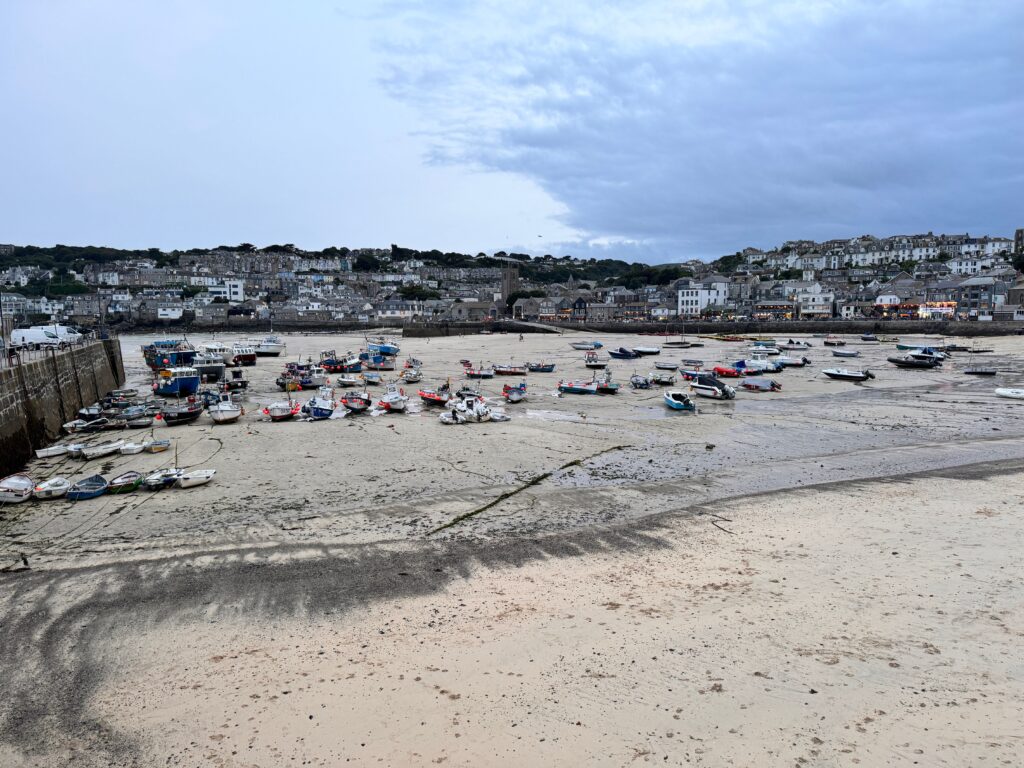
The harbour is the natural starting point for any visit. Fishing boats still work from here, and at low tide the sand stretches out between the piers, with children digging in the shallows and gulls circling overhead. Walk out along Smeaton’s Pier, which shelters the harbour, and look back at the town climbing the hillside in terraces of whitewashed cottages. The pier carries two small lighthouses, and the view from the end gives a first sense of how the town sits between the bay and the open Atlantic.
From the harbour, follow the path up to the Island, the grassy headland that stretches out from the east side of Porthmeor Beach. Despite the name, it is not an island at all, but a peninsula joined to the town. A gentle loop of around twenty minutes takes you around it, with the sea on every side and views across St Ives Bay towards Godrevy Lighthouse. At the top stands St Nicholas Chapel, a small medieval chapel that has watched over the town and its fishermen for centuries. It is one of the best places in St Ives to watch the sunset, when the light turns the whole bay gold.
Explore The Art That Made St Ives Famous
Painters were first drawn to St Ives in the 1880s by the quality of the light and the life of the fishing town. In the twentieth century it became one of the great centres of modern British art, home to Barbara Hepworth, Ben Nicholson, Bernard Leach and the fisherman-painter Alfred Wallis. That artistic heritage is still the town’s beating heart, and the galleries are the reason many visitors come.
Visit Tate St Ives Above Porthmeor Beach
Tate St Ives stands directly above Porthmeor Beach, on the site of a former gasworks. It first opened in 1993 to display the work of the St Ives School of artists, and it was extended in 2017 with a new building designed by Jamie Fobert Architects. The gallery focuses on modern and contemporary art, particularly work by artists who have lived and worked in Cornwall, alongside major temporary exhibitions that change through the year. The rooftop cafe is a fine place to pause, with views down over the beach and the surf below. Check the Tate website before visiting, as exhibition programmes and opening arrangements change through the seasons.
Step Into The Barbara Hepworth Museum And Sculpture Garden
A short walk from the Tate, the Barbara Hepworth Museum and Sculpture Garden is the former home and studio of the sculptor Barbara Hepworth, where she lived and worked from 1949 until her death in 1975. The studios have been left much as they were, with her tools, unfinished works and overalls still in place. The real revelation is the sub-tropical sculpture garden she planted herself, where her bronze and stone forms sit among the greenery exactly as she intended. It is a quiet, contemplative place, and many visitors find it the most moving stop in the town. Hepworth also carved the Madonna and Child in the town’s parish church, St Ia, which is worth seeking out afterwards.
Discover The Leach Pottery
On Higher Stennack, a short walk from the town centre, the Leach Pottery was founded in 1920 by Bernard Leach and the Japanese potter Shoji Hamada. It is widely regarded as the birthplace of British studio pottery and remains a working pottery today. Visitors can see the museum collection, watch potters at work and browse the shop, and the pottery runs courses and workshops for visitors who want to try their hand at the wheel. The old climbing kiln on the site is a reminder of how pottery was fired here for generations.
Relax On The Beaches Of St Ives
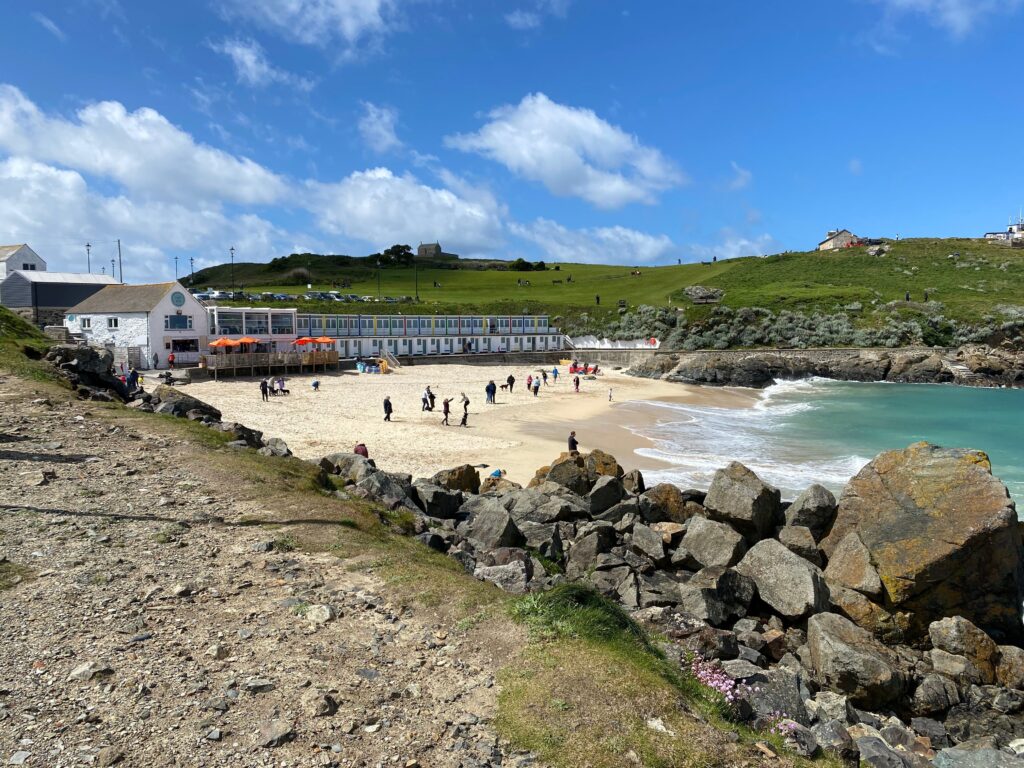
St Ives has four main town beaches, each with a different character, plus the harbour beach itself. Porthmeor Beach, below the Tate, is the town’s premier surf beach, facing the open Atlantic with consistent rollers that suit beginners and experienced surfers alike. Surf schools operate here through the season, and hiring a board for a lesson is one of the most popular things to do in St Ives for active visitors. Porthminster Beach, on the eastern side of town, is more sheltered, with calmer water and a gentle curve of sand that suits families. It looks out across the bay towards Godrevy Lighthouse. Porthgwidden, a small cove tucked below the Island, is the quietest of the three, reached down a flight of steps, and it is a good choice when the main beaches are busy. The harbour beach, inside the harbour wall, is where children paddle at low tide. Note that dogs are not allowed on Porthmeor, Porthminster and Carbis Bay between 15 May and 30 September, or on the Harbour Beach and Porthgwidden from 1 July to 31 August, between 10am and 6pm, so check the seasonal rules if you are travelling with a dog.
Take A Boat Trip To Seal Island And Godrevy
Seeing St Ives from the water changes how you understand the town. Boat trips leave from the harbour through the season, weather permitting, and the most popular runs out to Seal Island, a small rocky island around three and a half miles west of the town. It is home to a colony of Atlantic grey seals, and on a calm day you can watch them resting on the rocks or slipping through the water beside the boat. Longer trips continue around Godrevy Lighthouse, the 26-metre lighthouse built in the late 1850s to warn shipping of the Stones Reef, which inspired Virginia Woolf’s novel To the Lighthouse. Some trips use a fast rigid inflatable boat for a more thrilling ride along the cliffs. Trips generally run daily from April to October, and booking ahead is wise in school holidays. If you prefer to stay on dry land, the St Ives Museum, near the harbour, tells the story of the town’s pilchards, shipwrecks and lifeboats, and it is a good wet-weather stop.
Walk The South West Coast Path
St Ives sits on the South West Coast Path, the long-distance trail that runs around the coast of the South West, and some of its finest stretches start here. The easiest walk heads east from Porthminster Beach towards Carbis Bay, a gentle, mostly flat route along the shore that suits families and takes under an hour. The walk west from Porthmeor Beach towards Zennor is wilder and more demanding, climbing over rough, uneven ground past Clodgy Point and on towards the cliffs, with views back over the town and out to Seal Island. The full one-way walk to Zennor covers around six miles, and buses run back to St Ives if you do not want to retrace your steps. Wear proper walking shoes and check the weather before setting out. Whichever direction you choose, the coast path shows a side of St Ives that the town centre cannot, with wildflowers in spring, seabirds overhead and the Atlantic stretching to the horizon.
Wander Downalong, Fore Street And The Galleries
Downalong is the old fishermen’s quarter, a maze of narrow cobbled lanes and granite cottages running down to the harbour. It is the most atmospheric part of town for a wander, and it rewards slow looking: tiny courtyards, fishermen’s lofts converted into galleries, and glimpses of the sea at the end of every lane. Fore Street, the main shopping street, is lined with independent shops, galleries and cafes, and the St Ives Society of Artists shows rotating exhibitions in the former Mariners’ Church. Between the galleries, stop for a Cornish pasty, the town’s signature food, or for fish and chips eaten on the harbour wall. The town’s cafes and restaurants make good use of the day’s catch, and an evening meal overlooking the harbour is a fitting end to a day in St Ives. For ideas for more days out along the Cornish coast, see our guide to Cornwall and what to see, and for wider inspiration, our round-up of days out in the UK and things to do in England.
Practical Tips For Visiting St Ives
St Ives is best explored on foot, and the town centre is largely a maze of narrow streets where cars are more of a hindrance than a help. Driving in is best avoided in summer if you can. The most stress-free option is to park at St Erth station and take the scenic St Ives Bay Line branch train into the town, a short ride that runs along the coast with views across the bay. If you do drive, the main long-stay car park is Trenwith, at the top of the hill, and a shuttle bus runs down to the town in summer. Trains also connect St Erth to the main line, so the town is reachable by public transport from across Cornwall. St Ives is busiest in the school holidays and on sunny weekends, so an early start helps if you want the beaches and galleries at their quietest. Many galleries and the Tate have step-free access with lifts, but the old lanes of Downalong are cobbled and steep in places, so allow extra time if mobility is a concern.
St Ives rewards visitors who slow down. Whether you spend your time in the galleries, on the sand, on a boat or on the coast path, the town’s combination of light, sea and art is unlike anywhere else in Britain. Plan around the tides and the weather, leave the car behind, and give yourself at least a full day to do it justice.
Frequently Asked Questions About Things To Do In St Ives
How many days do you need in St Ives? One full day covers the harbour, the Tate, the Hepworth Museum and a beach or boat trip. Two or three days allow time for the coast path walks, the Leach Pottery and a slower pace through the galleries and lanes.
What is the best beach in St Ives? Porthmeor is best for surfing and wide open space, Porthminster is best for families and calmer water, and Porthgwidden is the quietest choice. All three are within a short walk of the town centre.
Is Tate St Ives worth visiting? Yes. It is one of the most visited galleries in the UK, with a strong collection of modern art connected to the town and a programme of temporary exhibitions, plus a cafe with views over Porthmeor Beach.
Can you see seals in St Ives? Yes. Boat trips from the harbour run out to Seal Island, home to a colony of Atlantic grey seals, and seals are also sometimes spotted from the coast path. Trips generally run from April to October, weather permitting.
How do you get to St Ives without a car? Take the train to St Erth and change onto the St Ives Bay Line branch train, which runs along the coast into the town. St Erth has a park and ride car park for drivers who want to leave the car outside the town.
When is the best time to visit St Ives? Late spring and early autumn offer warm weather with fewer crowds than the school summer holidays. Winter is quieter still, and the galleries and harbour walks are enjoyable all year round.
Leave a Reply