
Glasgow is Scotland’s largest city, and it is also one of the most rewarding city breaks in Britain. The list of things to do in Glasgow Scotland runs from grand Victorian museums to a medieval cathedral, from street art on a huge scale to a riverside shaped by shipbuilding. Much of the best of the city costs nothing at all: the great civic museums are free to enter, the cathedral is free, and the parks and the mural trail are free too. This guide covers the highlights for a first visit, with enough detail to plan two or three days properly.
Start At Kelvingrove Art Gallery And Museum
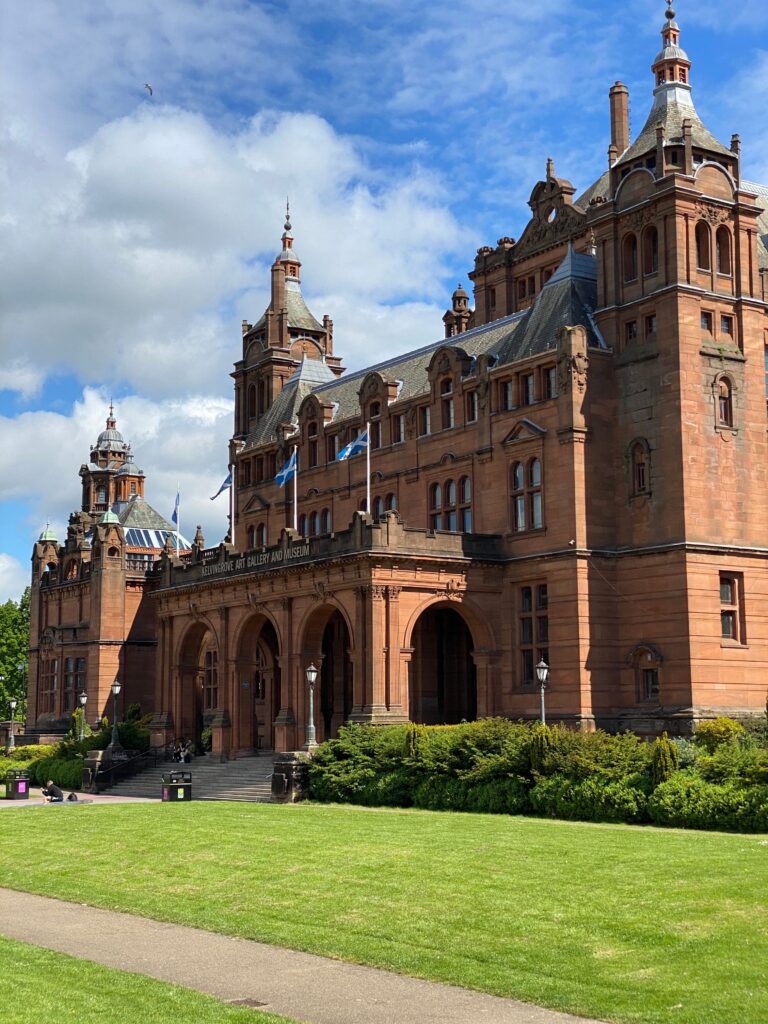
If you visit only one museum in Glasgow, make it Kelvingrove. The red sandstone building in the West End, beside Kelvingrove Park, opened in 1901 and has been one of Scotland’s most popular free attractions ever since. Inside, 22 galleries spread across two floors cover art, natural history, ancient Egypt, arms and armour and Scottish identity. Highlights include Salvador Dali’s Christ of Saint John of the Cross, works by the Scottish Colourists and the French Impressionists, and Sophie Cave’s Floating Heads installation in the main hall. Look up in the West Court and you will see a full-size Spitfire suspended from the ceiling, with Sir Roger the elephant standing below. The free organ recitals, held at 1pm on most days, are a proper Glasgow experience and worth timing your visit around. Conservation and repair work began on the building in September 2025, so you may see scaffolding in places, but the museum stays open throughout. Kelvingrove is free to enter, though donations help keep it that way.
Visit Glasgow Cathedral And The Necropolis
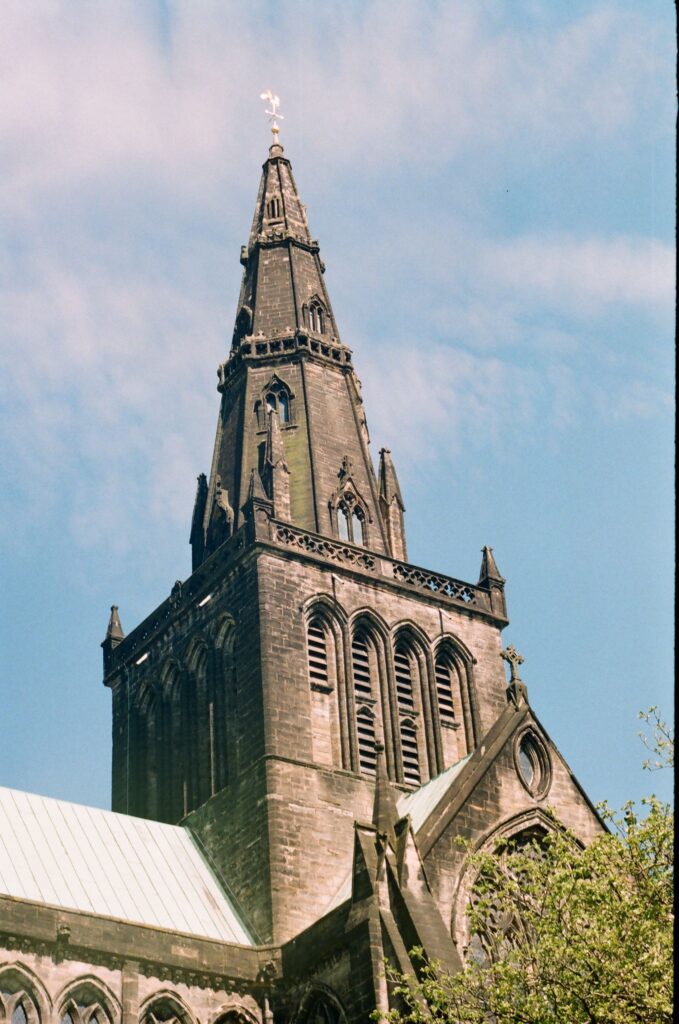
Glasgow Cathedral, also known as St Mungo’s Cathedral, is the oldest cathedral in mainland Scotland and the oldest building in Glasgow. The first stone cathedral on this site was dedicated in 1136, and the present building was dedicated in 1197, though much of what you see today dates from a major rebuilding in the thirteenth century and later work in the fifteenth. It is dedicated to St Mungo, also known as Kentigern, the city’s patron saint, whose tomb lies in the atmospheric Lower Church, a vaulted crypt built in the mid-thirteenth century. Unlike nearly all of Scotland’s other cathedrals, it survived the Reformation almost intact, because the Protestants decided to repurpose it for their own worship. The dark, imposing interior is a fine example of Gothic architecture, and the cathedral is cared for by Historic Environment Scotland. Entry is free, though donations are welcome. Behind the cathedral, the Necropolis rises on a hill. The cemetery was laid out in the 1830s, and its paths wind between grand monuments and tombs to some of the best views in the city, looking back over the cathedral and across the rooftops. The University of Glasgow was founded in 1451 and held its first classes in the cathedral’s chapter house, a reminder of how much of the city’s story begins on this spot.
Explore The Riverside Museum And The Tall Ship Glenlee
On the bank of the River Clyde stands the Riverside Museum, Glasgow’s museum of transport and technology. Designed by the architect Zaha Hadid, its zigzag roofline is one of the most recognisable sights in the city. Inside, the collection tells the story of Glasgow’s heavy industries, from shipbuilding to train-making and engineering, with trams, locomotives, old Glasgow cars and motorbikes on display. One highlight is the recreated street scene: a cobbled street lined with shops, houses and even a Subway station, offering a glimpse of Glasgow’s past. Entry to the museum is free. Moored outside on the Clyde is the Tall Ship Glenlee, a Clyde-built sailing ship that first slipped into the water at Port Glasgow on 3 December 1896. The Riverside pairs naturally with a walk along the Clyde, and the Finnieston area nearby has become one of the city’s best places to eat and drink, so it is an easy place to end a museum morning.
See The Burrell Collection In Pollok Country Park
South of the centre, in the woodland of Pollok Country Park, the Burrell Collection is one of the most rewarding museum experiences in Scotland. The collection was amassed over decades by Sir William Burrell, a Glasgow shipping magnate, and he and his wife Constance gifted more than 9,000 objects to the city in 1944. Burrell asked that the collection be shown in a rural setting, and the purpose-built gallery in the park finally matched that wish. After a major refurbishment, it reopened on 29 March 2022 with more of the collection on show than ever before. Inside you will find Chinese ceramics, medieval stained glass and tapestries, Impressionist paintings and much else, all framed by woodland views through the gallery’s glass walls. Entry is free. The park itself is worth time too, with its woodland paths, gardens and the famous Highland cattle that graze there. Allow at least half a day for the Burrell and the park together.
Walk George Square And Follow The City Centre Mural Trail
George Square is the civic heart of the city, a grand open space surrounded by impressive buildings. The City Chambers fills the eastern side of the square, and free daily tours take visitors inside to see the marble staircases and the ornate interiors. From the square, the City Centre Mural Trail is one of the best free things to do in Glasgow Scotland for anyone who likes exploring on foot. The trail began in 2008 with the first mural, and it now covers more than thirty large-scale works across the city centre, celebrating local wildlife, famous faces and Glasgow’s history and humour. Look out for the works by the artist Smug, including the portrait of St Enoch cradling the child St Mungo on George Street, and the striking modern murals around the Merchant City. The full route takes around two and a half hours without stopping, while the central cluster of murals takes just over an hour. Pick up a map online or simply follow the trail as you wander, and you will see parts of the centre you would otherwise miss.
Explore The West End, The University And Mackintosh
The West End is Glasgow’s most charming neighbourhood, and it repays an unhurried afternoon. The University of Glasgow stands above Kelvingrove Park on Gilmorehill, where it moved in 1870, and its Gothic main building, with its cloisters and quadrangles, is one of the most photographed sights in the city. The Hunterian Museum, within the university, holds the Mackintosh House, a reconstruction of the home of Charles Rennie Mackintosh and his wife Margaret Macdonald, furnished with their own designs. Mackintosh, the city’s most famous architect and designer, also left his mark on the Willow Tea Rooms on Sauchiehall Street, where you can take afternoon tea in a room he designed. Byres Road, the West End’s main street, is lined with independent shops, bookshops, cafes and bars, and Ashton Lane, a cobbled back street strung with fairy lights, is one of the prettiest places in Glasgow for an evening drink. The Botanic Gardens, with their Victorian glasshouses, are free and make a peaceful stop between the university and Byres Road.
Enjoy Glasgow’s Music, Food And Green Spaces
Glasgow’s live music scene is one of the best in Britain, with venues ranging from the grand concert hall to small basement clubs, and the city hosts the Celtic Connections festival each winter. For food, the Finnieston strip near the Riverside Museum and the streets around the West End offer everything from casual cafes to serious restaurants, and the Barras market in the East End is the city’s old market, busy at weekends. Glasgow Green, the city’s oldest park, is home to the People’s Palace, the museum of the city’s social history, which is currently closed for a major refurbishment, so check before planning a visit. For a wider sense of what Scotland’s cities offer, see our guide to things to do in Edinburgh, and for more city breaks across the UK, our guides to things to do in Newcastle and things to do in York. VisitScotland’s Glasgow guide is also a useful source for current events and opening times.
Practical Tips For Visiting Glasgow
Glasgow’s centre is compact and walkable, and the city’s Subway, a small underground loop, links the centre with the West End and the south side. Most of the big museums are free, which makes Glasgow one of the best-value city breaks in the UK, though some special exhibitions charge. Museums generally open daily from around 10am to 5pm, with later starts on Fridays and Sundays, but check the Glasgow Life website before you set off, as hours can change for holidays and events. The city is at its liveliest in summer, when the parks and the riverside fill up, but the museums and galleries make it a strong year-round destination. If you have more time, day trips to Loch Lomond and the Trossachs are easy by train or bus, and the Clyde coast is under an hour away.
Glasgow does not shout about itself the way some cities do, and that is part of its appeal. Give it two or three days, start with Kelvingrove and the cathedral, and you will find a city of grand buildings, free museums, warm people and a cultural life that punches well above its weight.
Frequently Asked Questions About Things To Do In Glasgow Scotland
What is the best thing to do in Glasgow? Kelvingrove Art Gallery and Museum is the first choice for most visitors: free, huge and full of highlights from Dali to a Spitfire. Glasgow Cathedral and the Necropolis come a close second for history and views.
Are Glasgow’s museums free? Yes. Kelvingrove, the Riverside Museum, the Burrell Collection and the Gallery of Modern Art are all free to enter, as is Glasgow Cathedral. You only pay for some special exhibitions.
How many days do you need in Glasgow? Two days covers the main museums, the cathedral and the West End. Three days allows time for Pollok Country Park, the mural trail and a day trip to Loch Lomond.
What is Glasgow famous for? Its Victorian architecture, its free museums, its shipbuilding heritage on the Clyde, the designer Charles Rennie Mackintosh, its live music scene and its friendly people.
Is Glasgow walkable? Yes. The city centre is compact, and the West End is an easy walk or a short Subway ride away. The Burrell Collection and Pollok Country Park are best reached by train or bus.
When is the best time to visit Glasgow? Late spring and summer bring the best weather and the liveliest parks, but the museums and galleries make Glasgow a good visit at any time of year.
Leave a Reply