
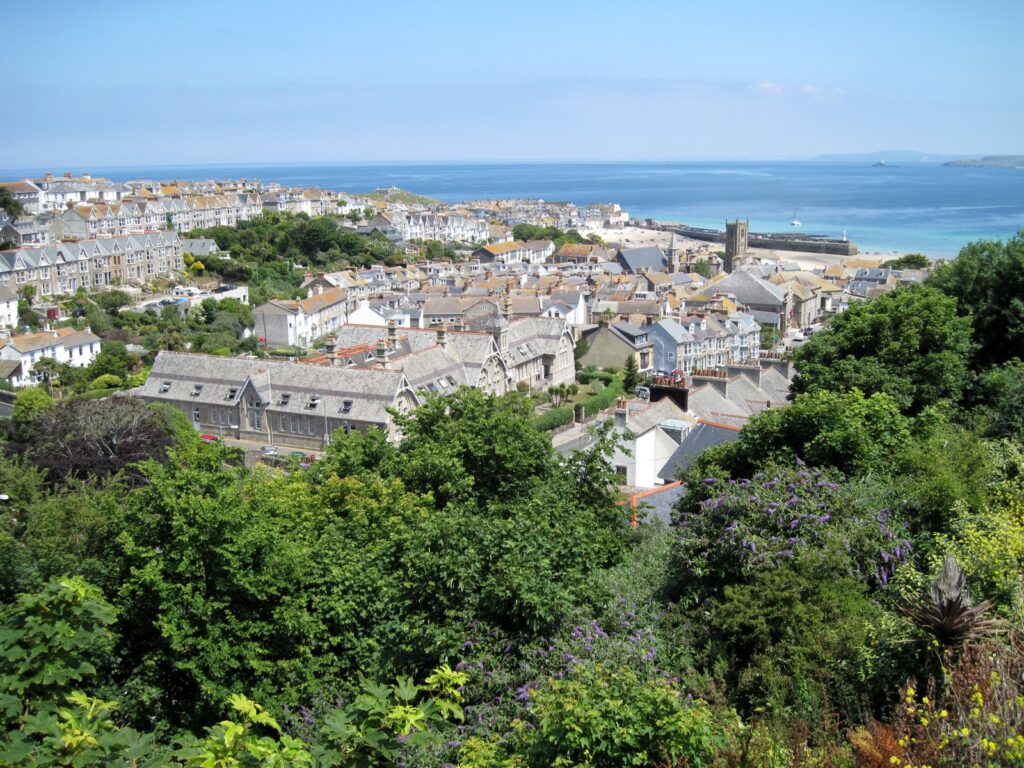
The best time to visit Cornwall depends on what you want from the trip. For warm sea, long evenings and beach days, late June to early September is usually the strongest choice. For quieter coast paths, gardens and lower demand, May, June and September often give the best balance. Cornwall has a maritime climate shaped by the sea on three sides, so winters are mild by UK standards and summers are warm rather than hot. This month-by-month guide explains the weather, crowds and seasonal feel so you can choose with confidence.
How Cornwall Weather Works
Cornwall sits at the south-western tip of England, surrounded by the Atlantic Ocean and the English Channel. The sea softens extremes. Frost is rare on the coast in winter, while summer heat is usually moderated by sea breezes. Long-term climate averages for Cornish coastal towns typically show July and August daytime highs around 18 to 19 degrees Celsius, with warmer spells into the low or mid twenties. May to August are generally the sunniest months, averaging around seven hours of sunshine a day in coastal resorts.
Sea temperature follows its own slower rhythm. The sea is coolest in February and March, at roughly 8 to 10 degrees Celsius, and warmest in August and into September, at around 15 to 17 degrees. That is why September can feel like an extension of summer for swimmers, even as evenings draw in. Visit Cornwall describes a county of about 300 miles of coastline, from sheltered south-coast creeks to the more exposed Atlantic north coast, and conditions can differ between the two on the same day. Always check a local forecast before beach or coast path plans, because Atlantic weather changes quickly.
Best Time To Visit Cornwall By Season
Spring From March To May
Spring is the season of lengthening days, wildflowers and gardens coming back to life. March remains cool, with daytime highs around 10 degrees, and a mix of sunshine, showers and wind. April typically reaches about 11 to 12 degrees, and May about 14 to 15 degrees, with May often among the sunniest months of the year. The sea is still cold, so swimming is mainly for wetsuit wearers, but walking conditions improve steadily.
Spring suits visitors who prefer space. Coast paths are quieter outside Easter and the late May half term, and attractions reopen or extend hours as the season builds. Gardens are a particular strength in spring. If your priority is walking, photography and peaceful villages rather than swimming, late April and May are hard to beat. Pack layers and a waterproof, because bright mornings can still turn showery.
Summer From June To August
Summer brings the warmest weather, the longest daylight and the fullest programme of events. June highs average around 17 degrees, while July and August average around 18 to 19 degrees. Sunsets fall well after 9pm around midsummer, giving long evenings for beach walks and harbour towns. The sea warms through the season, reaching its most inviting temperatures in August.
This is also peak season. School holidays in late July and August bring the busiest beaches, the fullest roads and the highest demand for accommodation. Book early if you travel then, and consider starting beach days early or choosing less famous coves. Families tied to school holidays will still find summer the easiest season, because lifeguarded beaches, boat trips and attractions are at their fullest. Visitors with flexible dates often prefer June, when the weather is already summery but crowds are lighter than in August.
Autumn From September To November
September is a favourite with experienced Cornwall visitors. Daytime highs average around 17 degrees, the sea remains close to its warmest, and many places feel calmer once schools return. It can feel like summer without the peak-season pressure, which makes it an excellent month for couples and walkers.
October cools to around 14 to 15 degrees and becomes more unsettled, with more wind and rain but also larger Atlantic swells that surfers value. November averages around 11 to 12 degrees, with shorter days and a wilder coast. Autumn also brings harvest-season food events in some towns, and the light over the coast can be beautiful. Choose September for a beach holiday, October for surf and dramatic walks, and November for quiet escapes with cosy indoor plans as backup.
Winter From December To February
Winter in Cornwall is mild but wet and windy. Daytime highs average around 8 to 10 degrees, and snow is uncommon on the coast. The reward is space: empty beaches, dramatic waves and a slower pace in villages and towns. Christmas lights in harbour communities add atmosphere in December, while January and February suit walkers who dress for the weather and enjoy storm watching from safe places.
The trade-offs are short daylight, changeable weather and some seasonal businesses operating reduced hours or closing for winter. Winter works best for a short break built around coastal walks, food and rest rather than a packed sightseeing schedule. If you want to plan what to see once you arrive, our guide to what to see in Cornwall covers the places, while this guide helps you choose when to go.
Cornwall Month By Month
- January: Cool and quiet, highs around 8 to 9 degrees. Best for empty beaches, coastal walks and a restorative short break.
- February: Similar to January, with the sea at its coldest. A peaceful month for couples who do not mind wrapping up.
- March: Early spring signs, highs around 10 degrees. Gardens begin to stir and days lengthen, but expect changeable weather.
- April: Brighter and milder, highs around 11 to 12 degrees. Good for walkers and garden visits, with Easter bringing a busier spell.
- May: One of the sunniest months, highs around 14 to 15 degrees. Excellent for coast paths and wildflowers, with a late half-term peak.
- June: Early summer, highs around 17 degrees and very long evenings. A strong all-round month before peak crowds arrive.
- July: Warm and lively, highs around 18 to 19 degrees. Beach season in full swing, busier from the school holidays.
- August: Usually the warmest month, with the warmest sea. The busiest and most in-demand month, so book well ahead.
- September: Highs around 17 degrees with a still-warm sea. Often the best balance of weather and space.
- October: Cooler and windier, highs around 14 to 15 degrees. Good surf, autumn colour and a half-term family peak.
- November: Highs around 11 to 12 degrees. Quiet, dramatic and best suited to walkers and cosy breaks.
- December: Mild by UK standards, highs around 9 to 10 degrees. Festive lights and wild coastal scenery, with short days.
Best Time To Visit Cornwall For Different Trips
For Beaches And Swimming
Choose late June to early September. July and August give the warmest air, while August and September give the warmest sea. If you dislike crowds, aim for June or September and accept slightly cooler air in exchange for space. Always swim at lifeguarded beaches where possible and follow local safety advice, because Atlantic conditions vary.
For Walking And Gardens
Choose April to June or September. Spring offers wildflowers and fresh green growth, while September offers settled days and warm light. Summer walking is also rewarding, but paths and popular viewpoints are busier, and you should carry water and sun protection on exposed cliff sections.
For Families
Families limited to school holidays should book summer or the May and October half terms early. Summer gives the widest choice of open attractions and beach facilities. May half term can offer pleasant weather with slightly less pressure than August, while October half term suits families who enjoy coastal walks and indoor attractions as backup.
For Surfing
Surf is possible year-round in Cornwall, with autumn often bringing larger Atlantic swells. Summer suits beginners who prefer smaller waves and warmer water, while experienced surfers may favour autumn conditions. Use reputable surf schools, check forecasts and respect lifeguard flags.
For A Quiet Short Break
Choose November to March outside Christmas and New Year, or midweek in spring and autumn. You will find the quietest lanes and beaches, but plan flexible days with indoor options. Our UK weekend breaks guide can help you shape a shorter trip.
Crowds Prices And Booking Tips
Demand follows the school calendar. Late July and August are the most expensive and crowded period in general terms, with Easter, May half term and October half term also busy. Shoulder months such as May, June and September usually offer a better balance of weather and availability. Winter generally has the lowest demand, except around Christmas and New Year.
Book accommodation early for summer, especially in popular coastal towns. If prices matter most, travel outside school holidays and consider staying slightly inland, where availability can be better while beaches remain within reach. Cornwall is also one of the best places to visit in England, so popular areas fill quickly in fine weather. Flexible dates, midweek stays and booking ahead are the simplest ways to improve choice.
Practical Tips For Choosing Your Dates
- Match the month to your main activity first, then check crowds and prices.
- Treat climate averages as a guide, not a promise. Pack layers and waterproofs in every season.
- Check the local forecast and tide times before beach and coast path days.
- Book summer accommodation and popular attractions early.
- Allow extra driving time in peak season, especially on changeover days.
- Build indoor backup plans for autumn and winter trips.
Frequently Asked Questions
What Is The Best Time To Visit Cornwall?
For most visitors, May to September offers the best combination of weather and open attractions. June and September often give the best balance of warmth and space, while July and August suit beach-focused family holidays.
What Is The Warmest Month In Cornwall?
August is usually the warmest month, with average daytime highs around 18 to 19 degrees Celsius and the sea at its warmest, around 15 to 17 degrees. Warmer spells can push temperatures higher.
When Is Cornwall Quietest?
January and February are generally the quietest months, followed by November and early December outside festive periods. Spring and autumn weekdays are also calmer than school-holiday weeks.
Is September A Good Time To Visit Cornwall?
Yes. September often feels like an extension of summer, with highs around 17 degrees and a sea still close to its warmest. Crowds ease after the school holidays, making it a favourite month for many visitors.
When Should You Avoid Visiting Cornwall?
There is no month to avoid completely, but late July and August can feel crowded and expensive, while winter brings the wettest and windiest weather. Choose based on whether you value warmth, space or value most.
Final Thoughts
Cornwall rewards visitors in every season, but the right month depends on your priorities. Choose summer for beaches and long evenings, spring for gardens and walking, September for warmth with space, and winter for drama and quiet. Pick the season that matches your trip, book peak dates early, and pack for changeable Atlantic weather. With that approach, Cornwall can deliver a memorable break at almost any time of year.




Leave a Reply